An AI tool, NotebookLM has read Mike Altmaier’s book Among The Pines and reports:
The original Dining Hall at Camp Kawanhee was a central structure from the camp’s founding until its destruction in the July 1977. Here is a history of the building based on the sources:
Construction and Early Years (1918–1921)
A “Wildcat” Project: Construction on the “Main Lodge,” which later became the Dining Hall, reportedly began as early as 1918
. It was built by a local crew of twelve men led by Fezz “Wildcat” Schofield”
.
The First Summer: By the first summer in 1921, the building was functional, though the fireplace and chimney were not finished until June
.
Multi-Purpose Building: In the very early years, the first floor served as the dining area, while the second floor housed a reading area, game room, and several bedrooms for visiting parents
. For the 1921 season only, some campers (a group called the Flying Deer) were also housed on the second floor
.
Expansion and Key Features
1953 Expansion: As camp enrollment grew, the south end of the Dining Hall was expanded in 1953 to make room for four more tables, making mealtime more comfortable
.
Historical Displays: The south wall of the original Dining Hall featured a collage of historic pictures of the Shop
. It was also where the Maroon-Grey scores were displayed on white poster boards starting in 1938
.
Staff Quarters: The rooms on the second floor eventually became spartan living quarters for staff members who did not live in lodges with campers, such as the kitchen staff and older female staff
. These rooms were colloquially known as the “Kawanhee Hilton”
.The fire that destroyed it happened in July 1977.
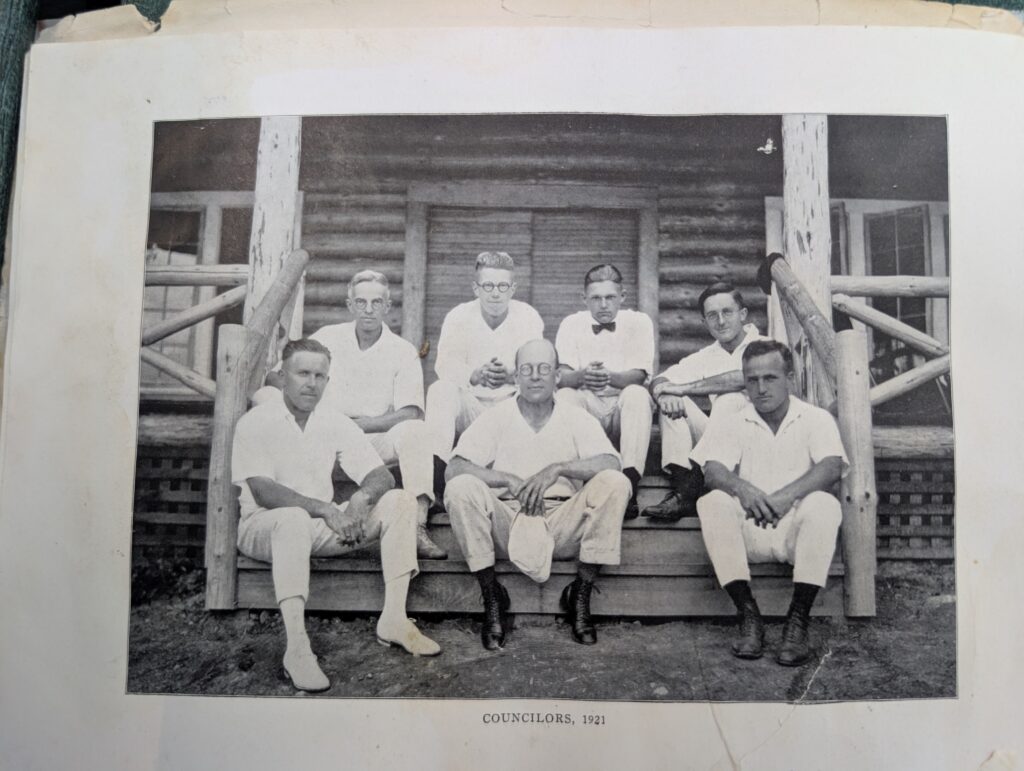
Page 4 of the 1922 Catalog. So the picture is from 1921 camp season. I think it has to be the front of the Dinning Hall. ote the doors. Note the X pattern on the porch rails. I think I can see 4 steps?
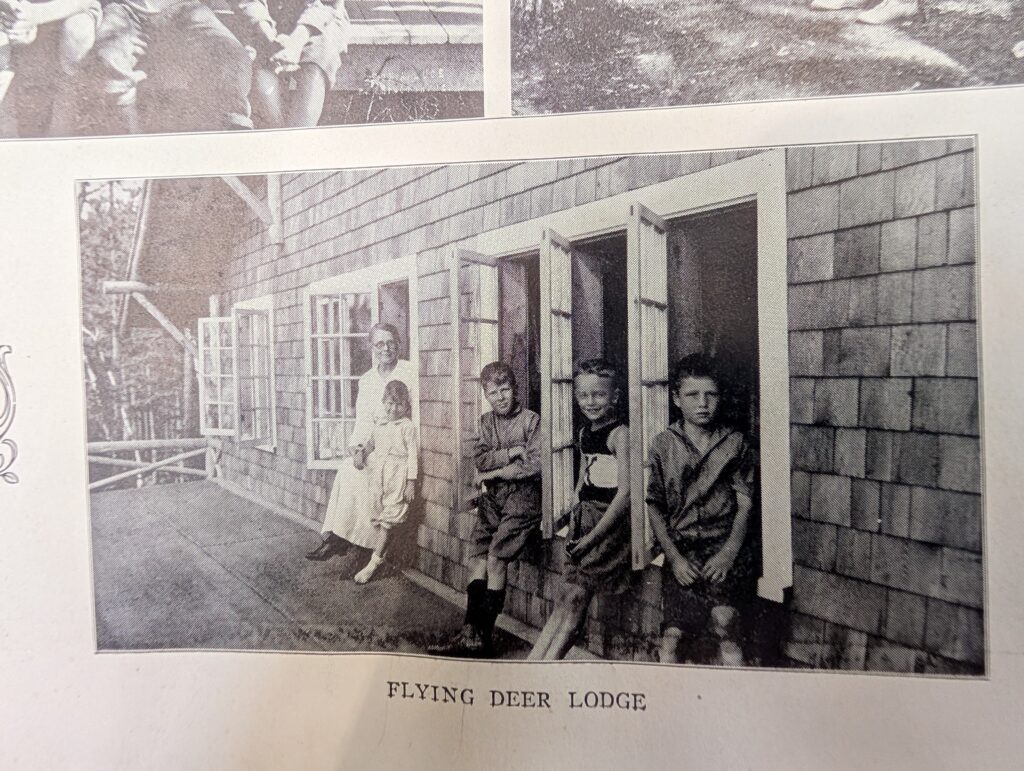
On page 5 of the same 1922 Catalog, so must be a 1921 camper scene, we have the only instance ever recorded of a Flying Deer lodge on the second floor of the Dinning Hall. And a small hint that Ma Frank is the councilor! Everything suggests that they are standing the the roof of the front porch and the windows are facing the lake.
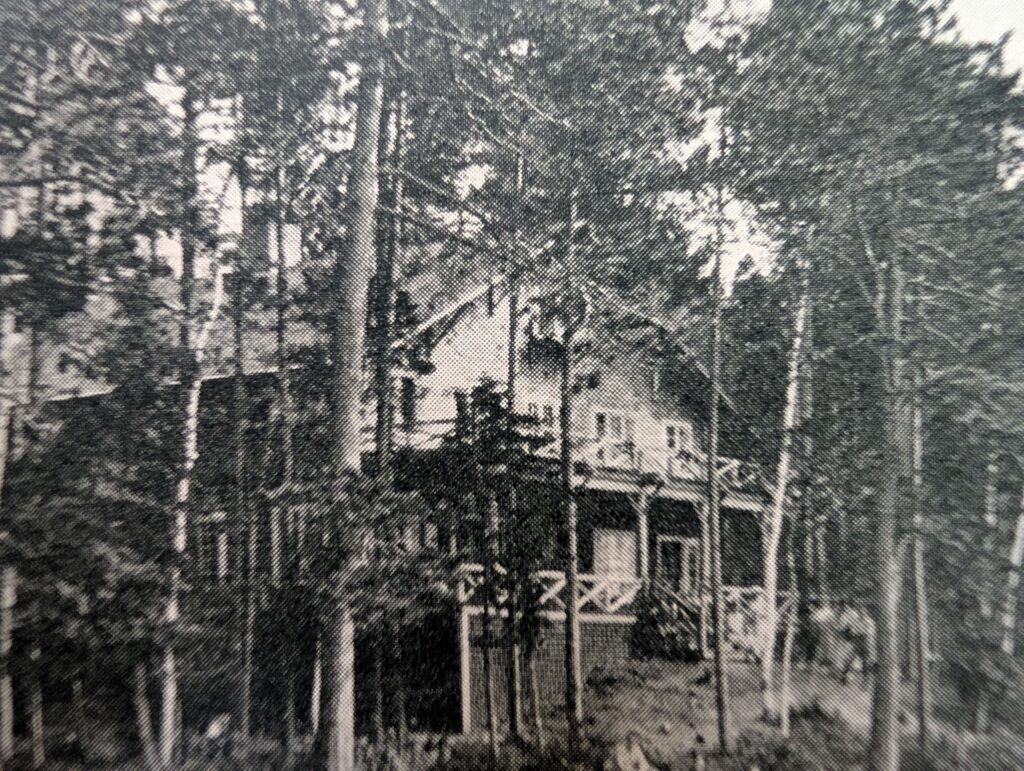
Page 6 of 1923 catalog, summer 1922, we get our first poor look of the entire building. Everything about the Flying Deer roof picture seems to be confirmed. That is a porch roof they are standing on, the windows are long vertical swing open. Also the door, railing design and 4 steps of the front from the councilor picture seems to be confirmed. There clearly is a chimney
Page 27 of this same 1923 catalog we get our first look at another side of the building, maybe the back, East, facing away from the lake. Note the double hung windows and of course the shoes!
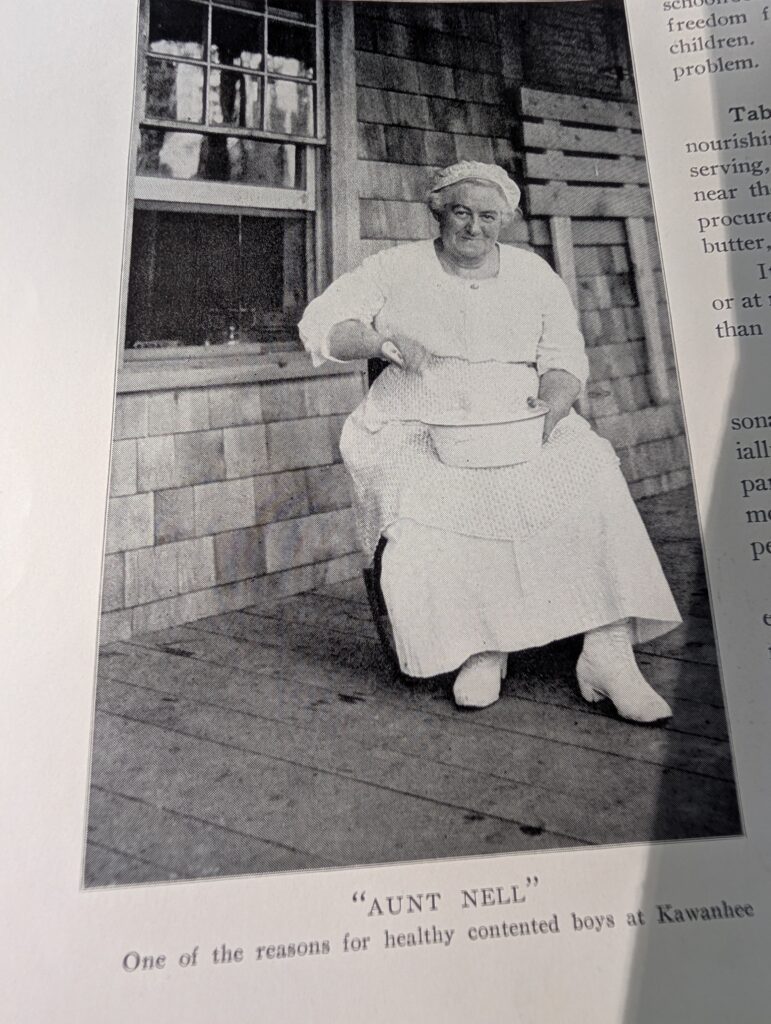
Mike’s book, through the eyes of NotebookLM provides a few more details. Aunt Nell, whose real name was Nellie Savage, was the first cook in the history of Camp Kawanhee. She is described as a “silver haired lady” who managed the kitchen during the camp’s earliest years. She lived in Weld, and the land she once owned is now the site of the Weld Historical Society complex. Her original home still stands today and serves as the Museum House for the society. She served as the camp’s official cook through the 1920s, but she disappeared from the camp catalogs by 1930. She was eventually succeeded in 1932 by a husband-and-wife cooking team, Laurence and Emma Briggs. Mike give us an interesting historical connection between the camp’s first cook and its long-time chef, Sean Minear, who also serves as the President of the Weld Historical Society. One more link, Sean Minear’s niece is Bailey Scott who has run the Kawanhee Kitchen for the last few years.
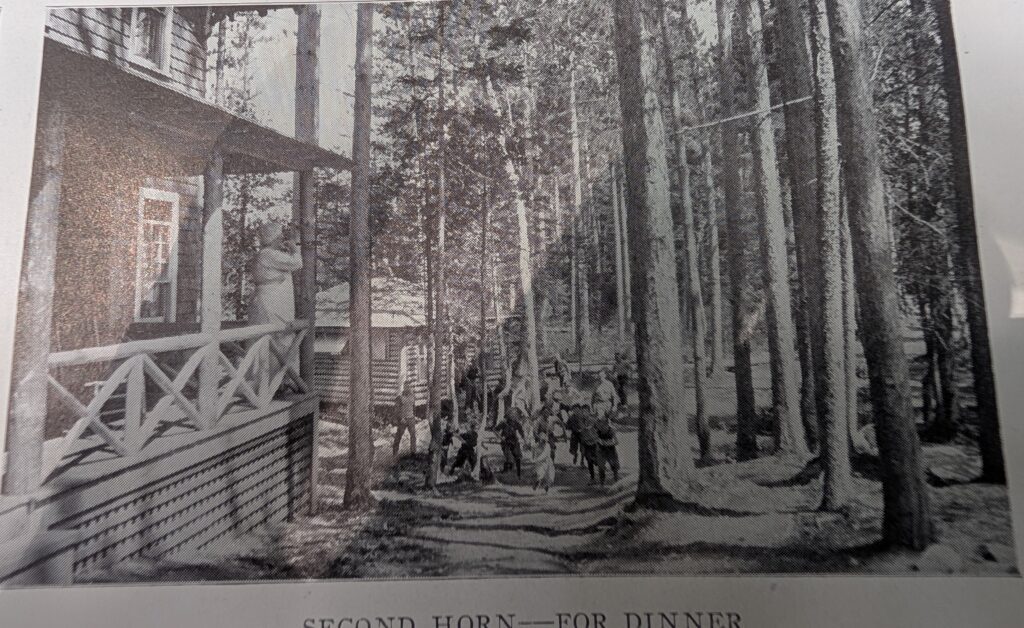
Page 28 from the same 1923 catalog gives us Aunt Nell blowing the horn for dinner. It is labeled as the second horn implying that even in those days multiple blasts where used to allow campers to prepare for meals. So where is she blowing from? It is a covered porch. I could argue that the windows are double hung and that it is on the East side and we see Eagle and Falcon cabins in the background.
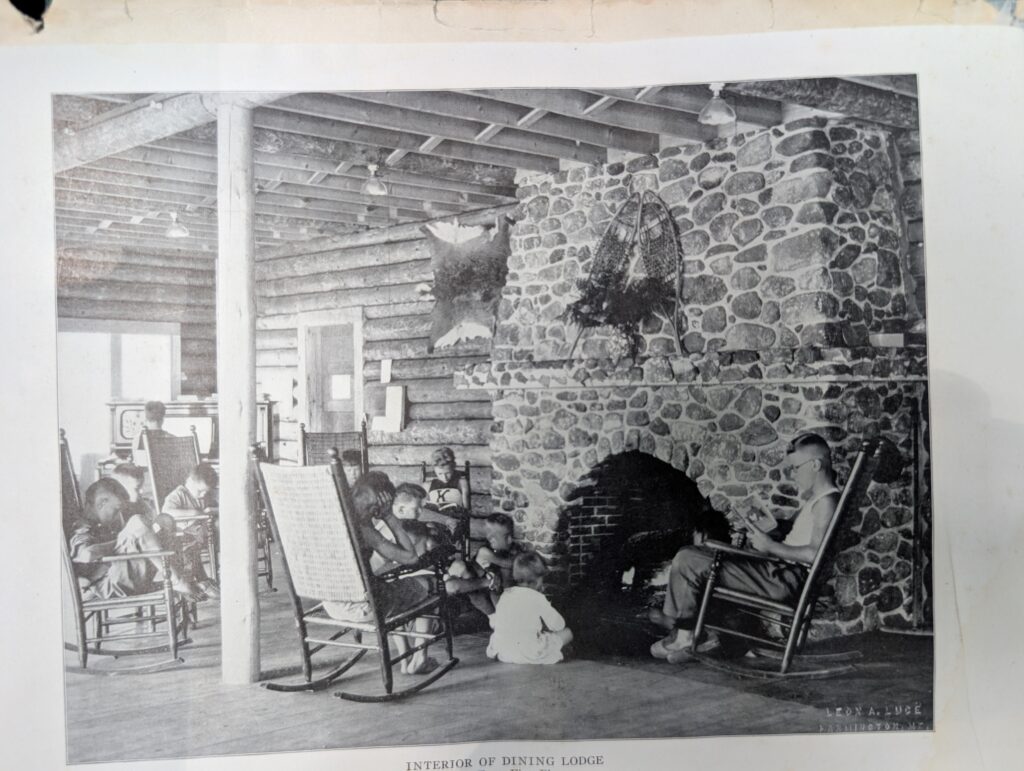
1924 Page 16 reading room, so campers in te summer of 1923. Those are snow shoes leaning in over the fireplace and a animal skin on the wall to the left. Note the