The Collections and Archives of Camp Kawanhee for Boys
Highlights from the Betty Frank Photo Collection
Though most remember Raymond Frank for his contributions as camp director, he was also an avid camp photographer. Raymond developed a passion for photography after acquiring a Leica camera during World War I. His photos of camp were featured in many catalogs throughout the 1920s and into the early 1930s. When applicable, the catalog captions for each photo are included in the photo captions below. The photos―donated by Raymond’s daughter, Betty Frank― demonstrate not only Raymond’s trained eye but also offer insight into what camp was like in its early years.
The Great Outdoors
Camp Kawanhee was founded as a place where boys could access and benefit from the great outdoors. For many years, Kawanhee had its own Boy Scout troop named Kah Ne Do Go Nah, meaning “among the pines”. Eventually, the troop was dissolved and the camp craft activity, which teaches campers many of the same outdoor survival skills, took its place. Other early outdoor activities included archery and tripping.
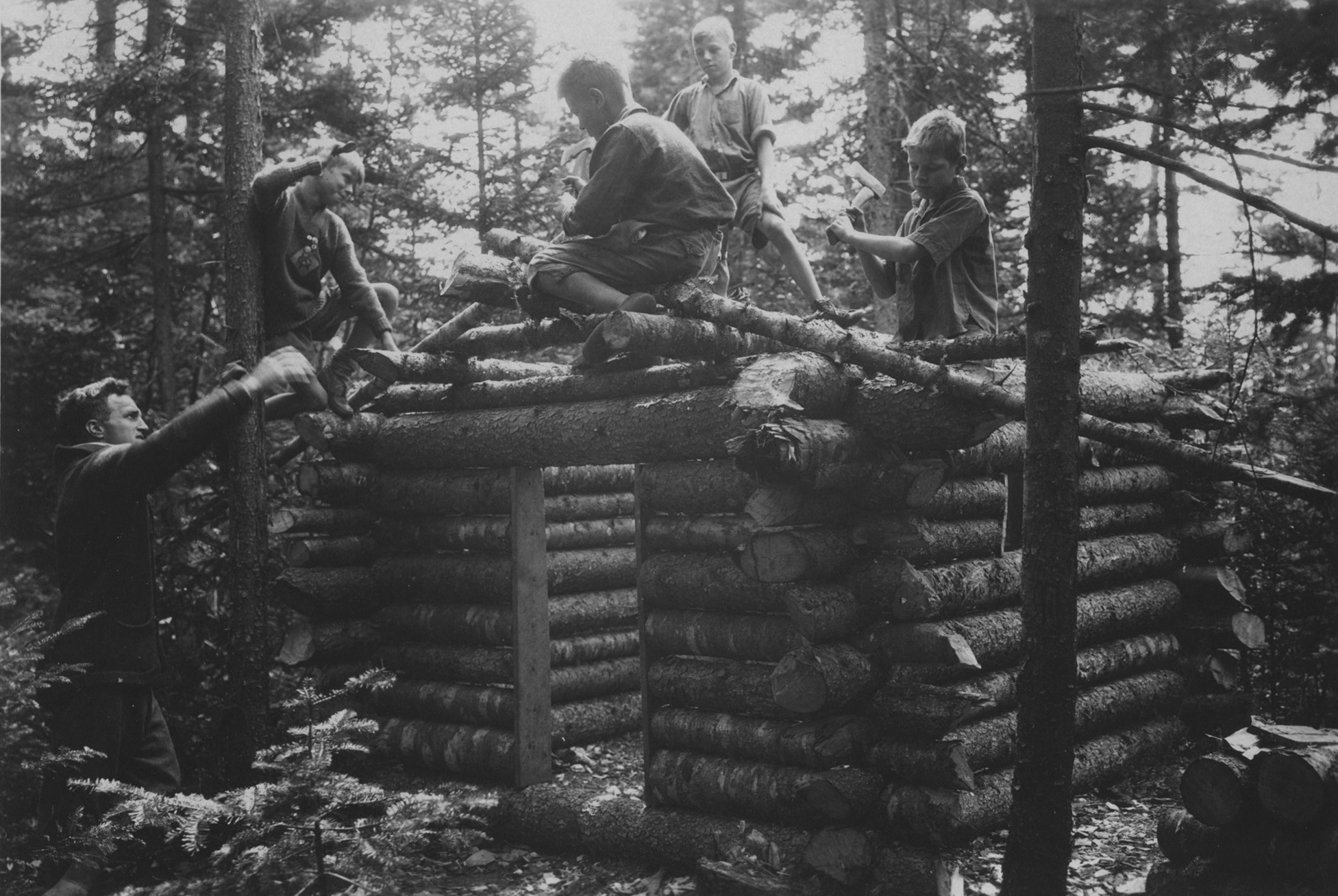
This image is featured in the 1926 catalog and titled “A Real Accomplishment.” The caption claims that the cabin was, “Planned and constructed by four boys during open periods or free afternoons. It represents initiative, sticktoitiveness, hard work and ‘heaps’ of fun. The cabin was started, fully completed, including fir bow beds, and dedicated before the close of camp in 1925.” Additionally, a stone fireplace was constructed at the entrance to the cabin. The completed cabin is pictured below.
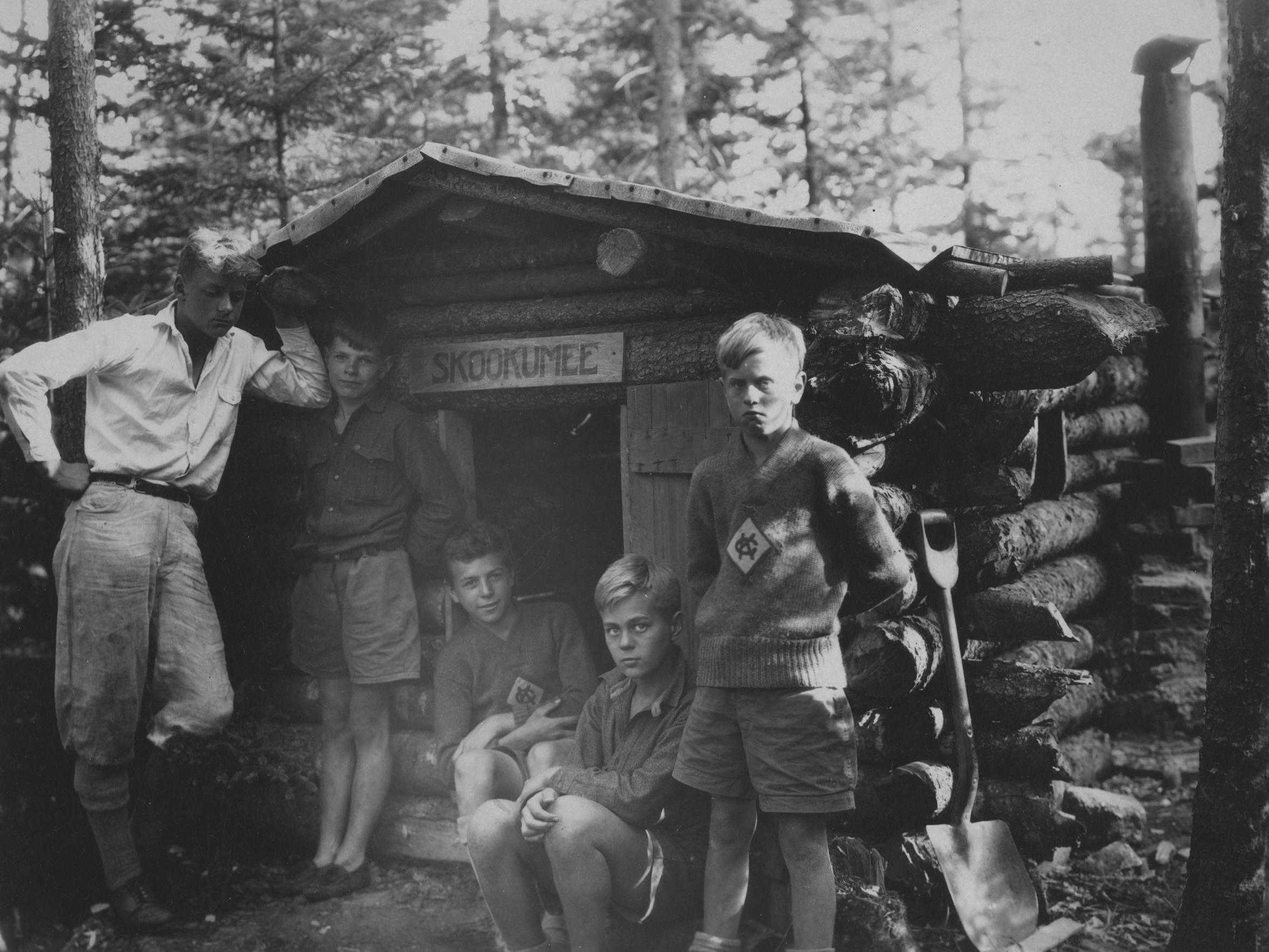
Campers stand outside of their completed cabin. According to the 1927 catalog, this cabin was “located in a secret spot about a mile from camp” and hosted many overnight trips. Given the name posted above the cabin’s entrance, it’s likely that this secret location was what is now known as Skookumee Beach, just across the lake from the Kawanhee waterfront. Boys enjoy canoeing there for overnights with their lodges to this day. Camp lore maintains that Skookumee was the name of Chief Kawanhee’s son.
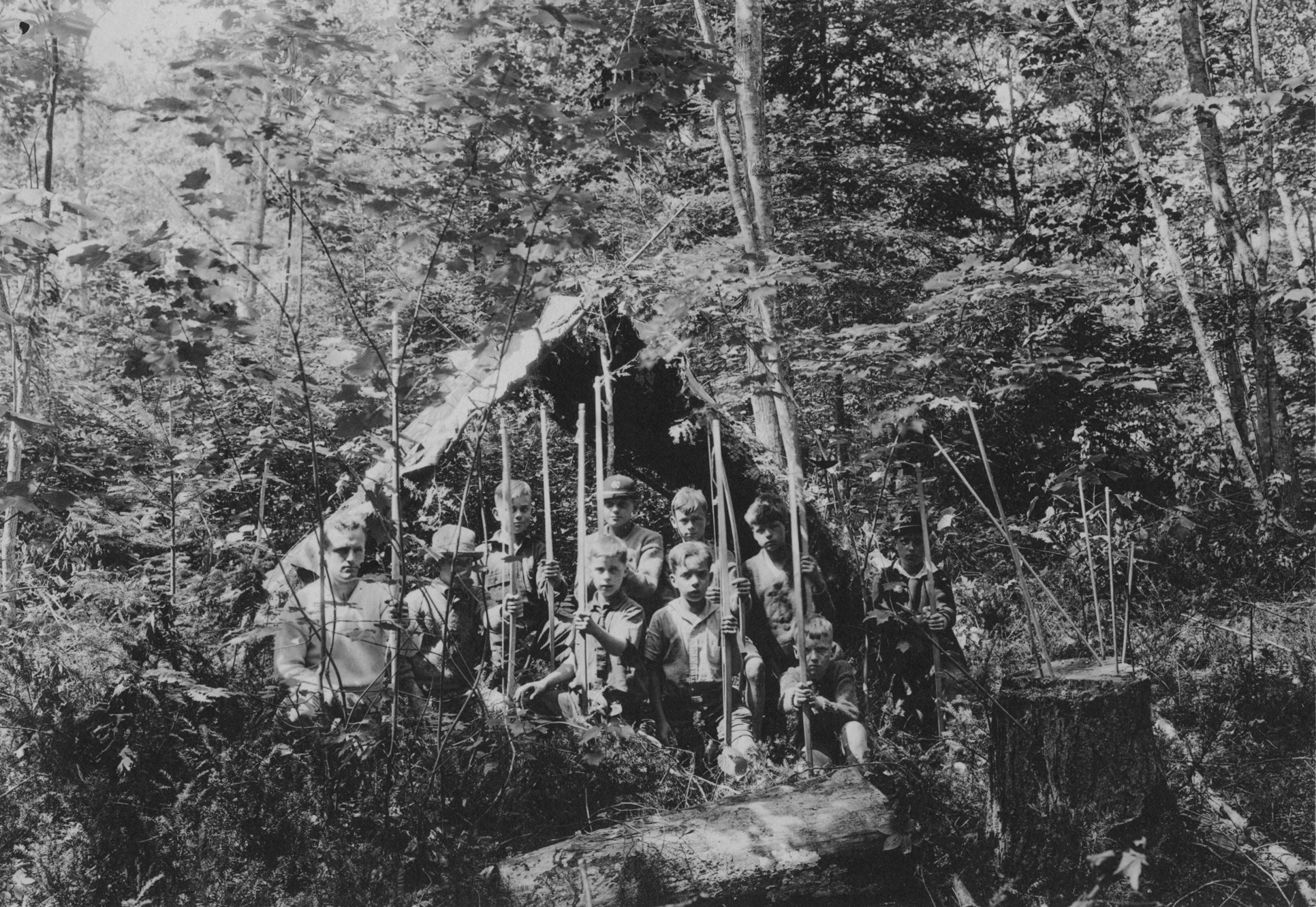
Members of the Robin Hood Archery Club pose with bows and arrows made from lemonwood in woodshop. The boys met their leader in “a secret spot, far back in the dense woods… to discuss the various ways of emulating the helpful and unselfish spirit of that brave leader of old, whose heroic life is dear to the heart of every boy.” This photo was published in the 1924 catalog.
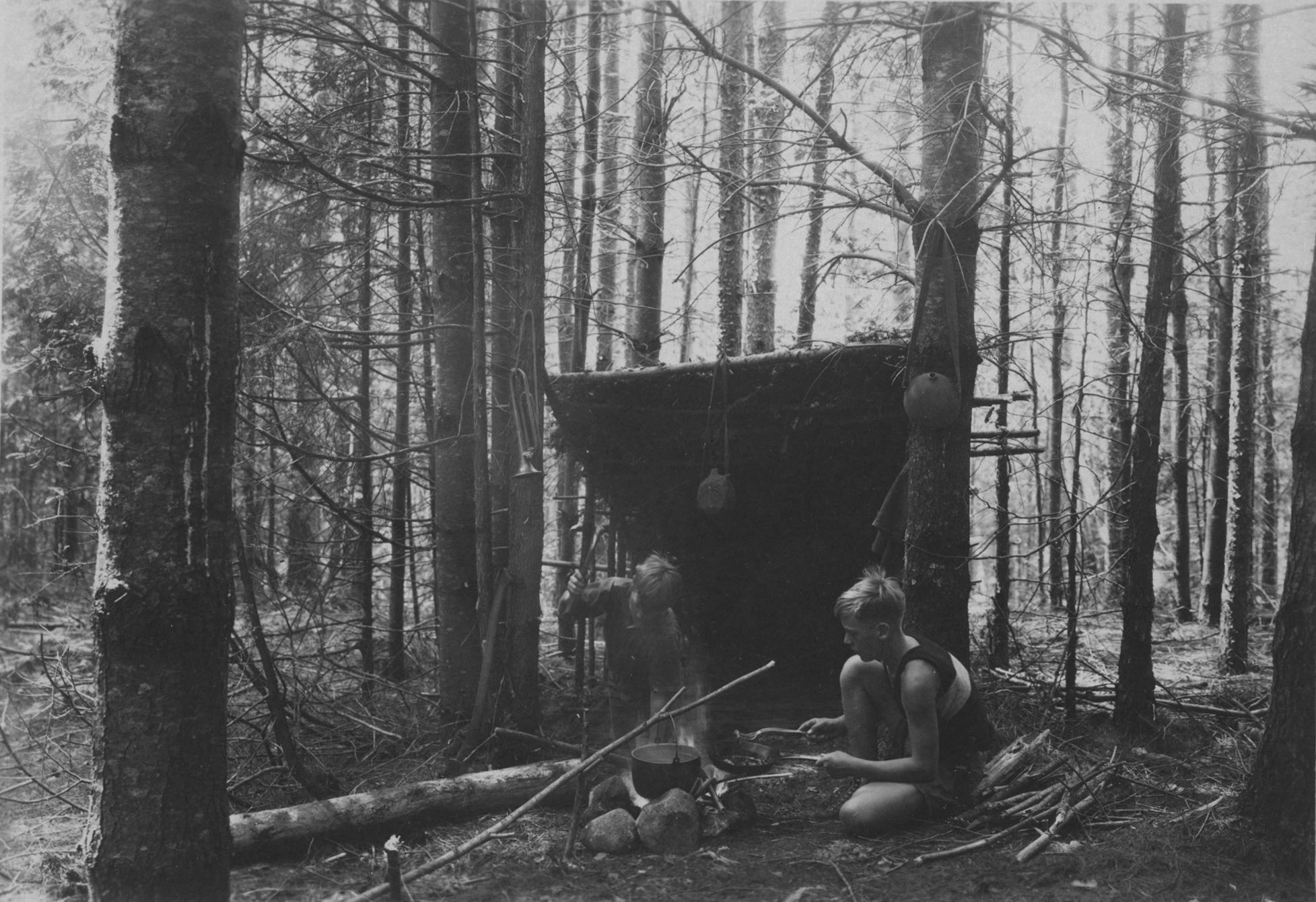
To earn emblems, boys must: “construct a lean-to, sleep in it over night, cook breakfast over an open fire.”
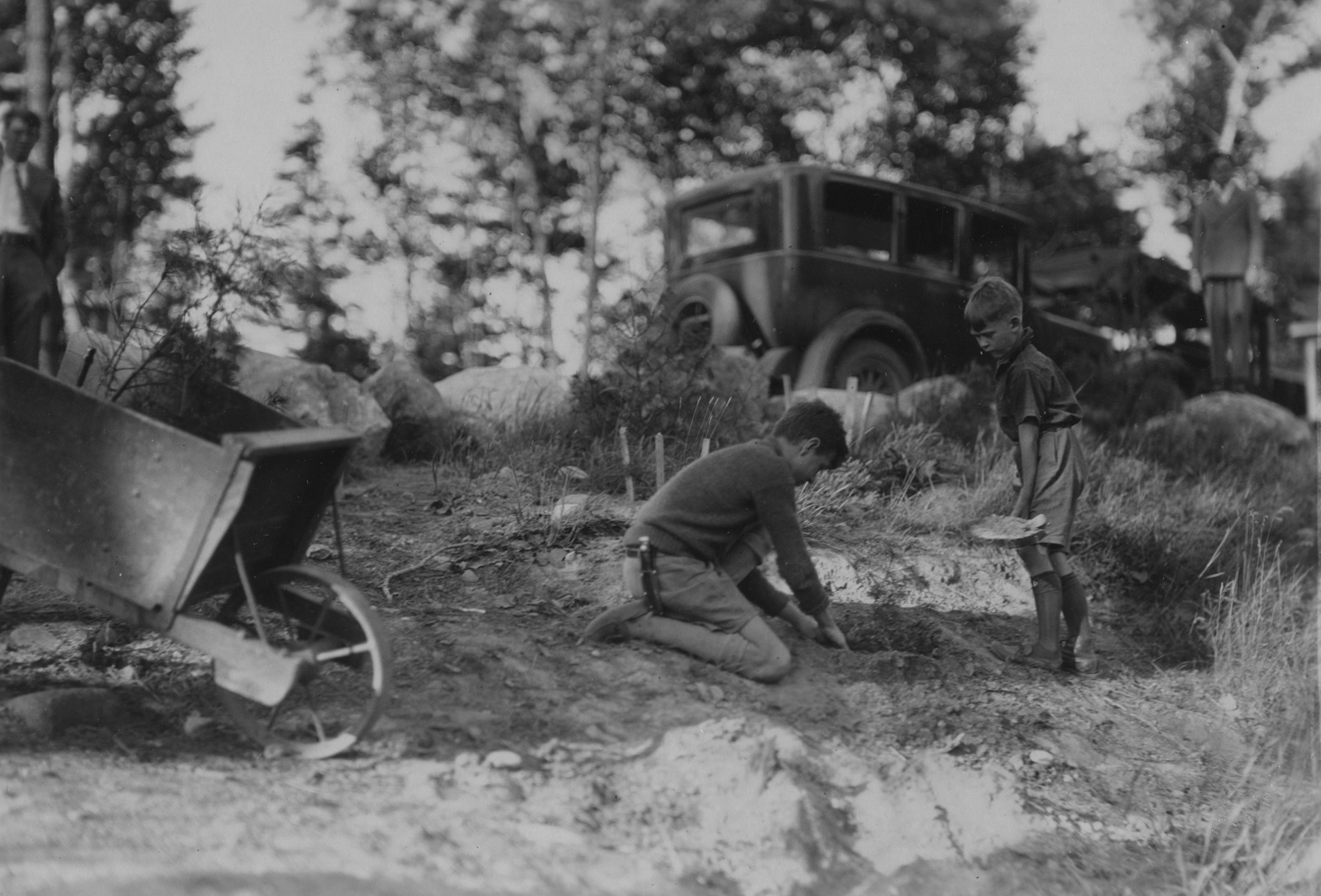
Two boys dig.
Athletics
Though Camp Kawanhee is not exclusively an athletics camp, boys have the opportunity to play sports of all kinds. In the 1920s and ’30s, popular sports included wrestling, running, horseback riding and gymnastics.
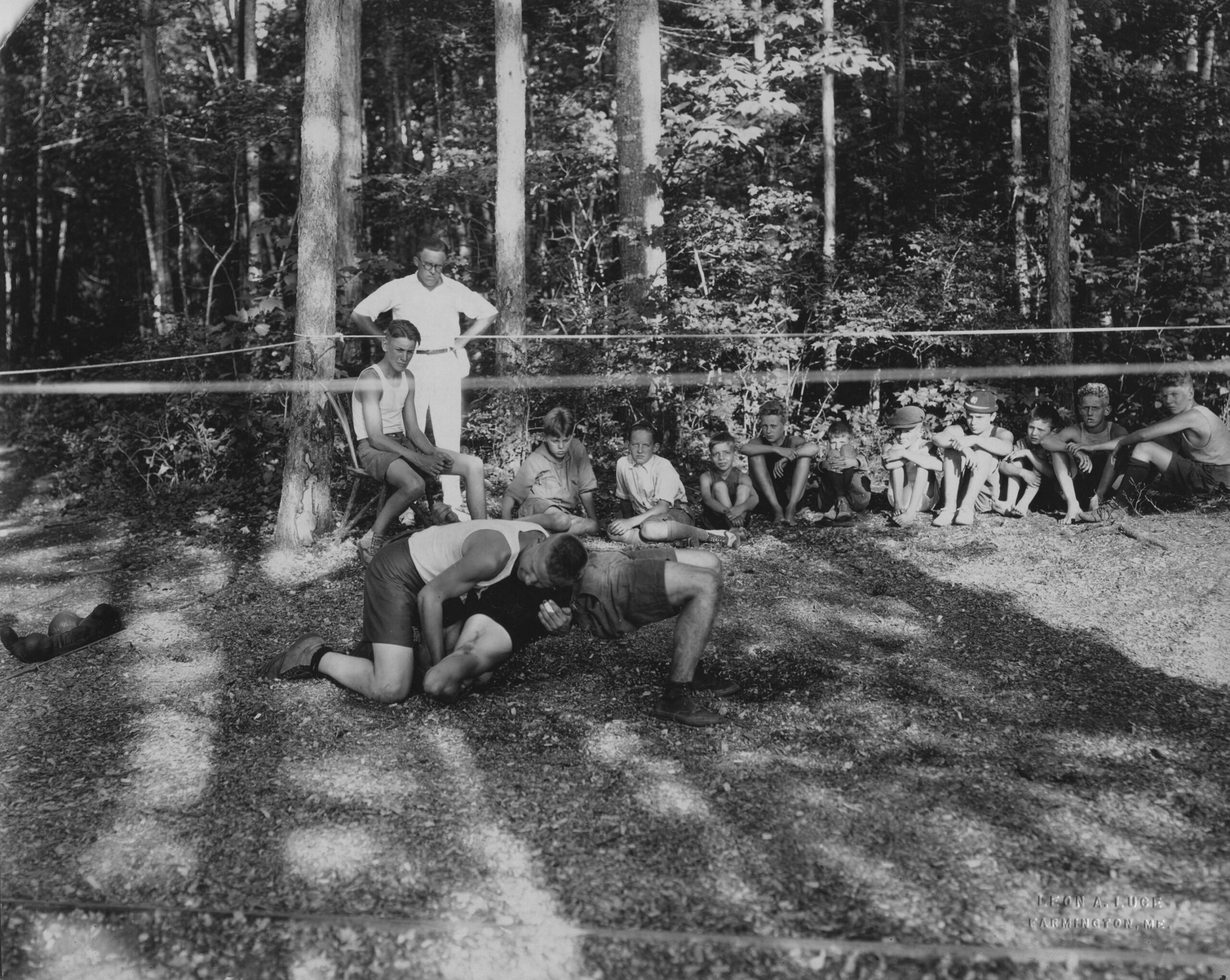
Campers wrestle in an outdoor ring. This photo was first published in the 1924 catalog. The 1930 catalog describes, “Nearly all boys at camp are interested in learning something of the art of boxing and wrestling. Not that such instruction shall make them pugnacious scrappers, nor over-cocky, but for the reason that it quickens the eye, makes them agile, develops courage, makes them graceful on their feet and, above all, develops a firmly implanted feeling of good sportsmanship. The boy who cannot control himself and his spirit, who cannot strike fairly without fouling, who cannot have his shoulders pinned to take a biff on the beak without whimpering, will not win the esteem of his mates in and around the boxing and wrestling ring.”
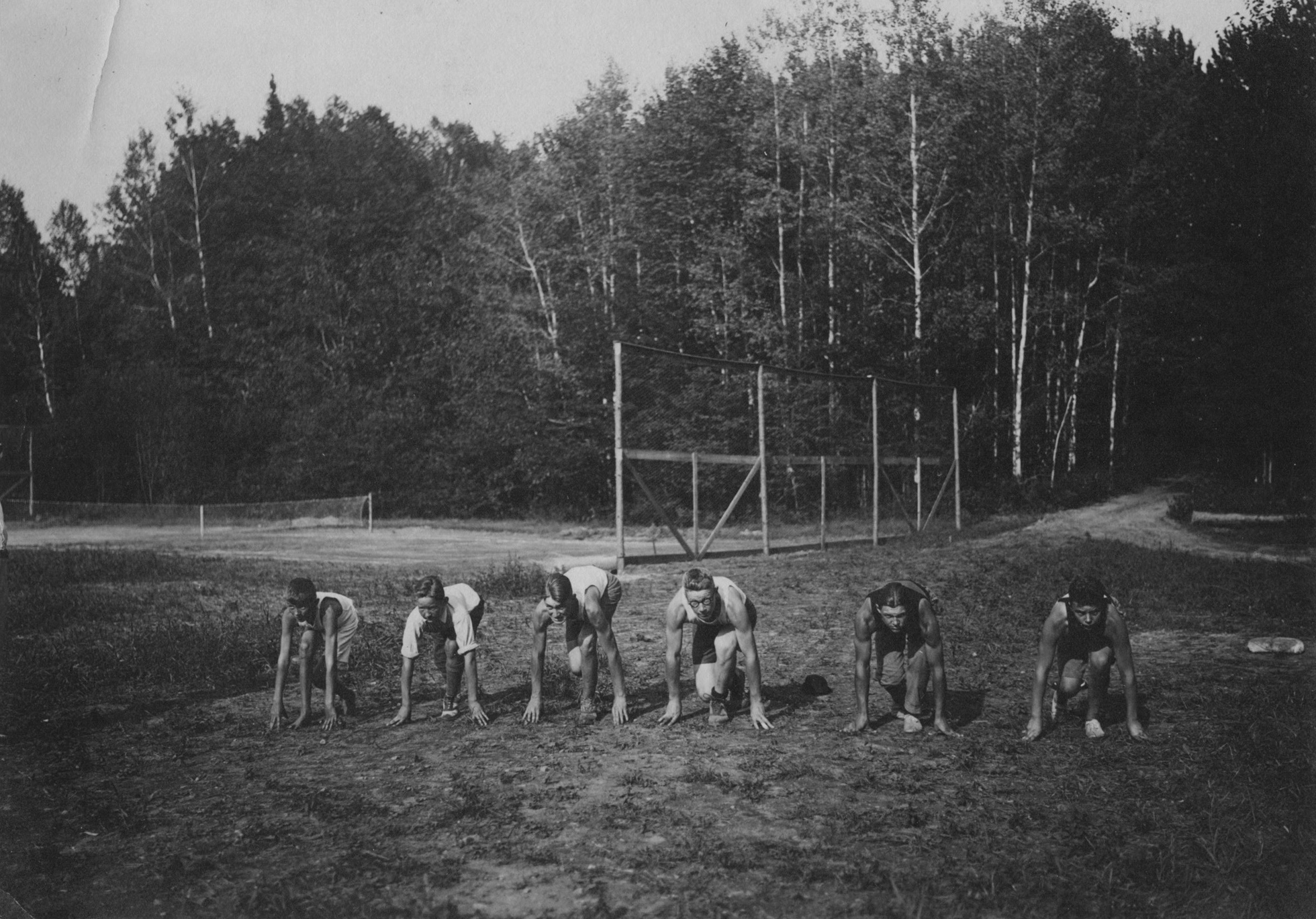
Boys crouch before the start of a race.
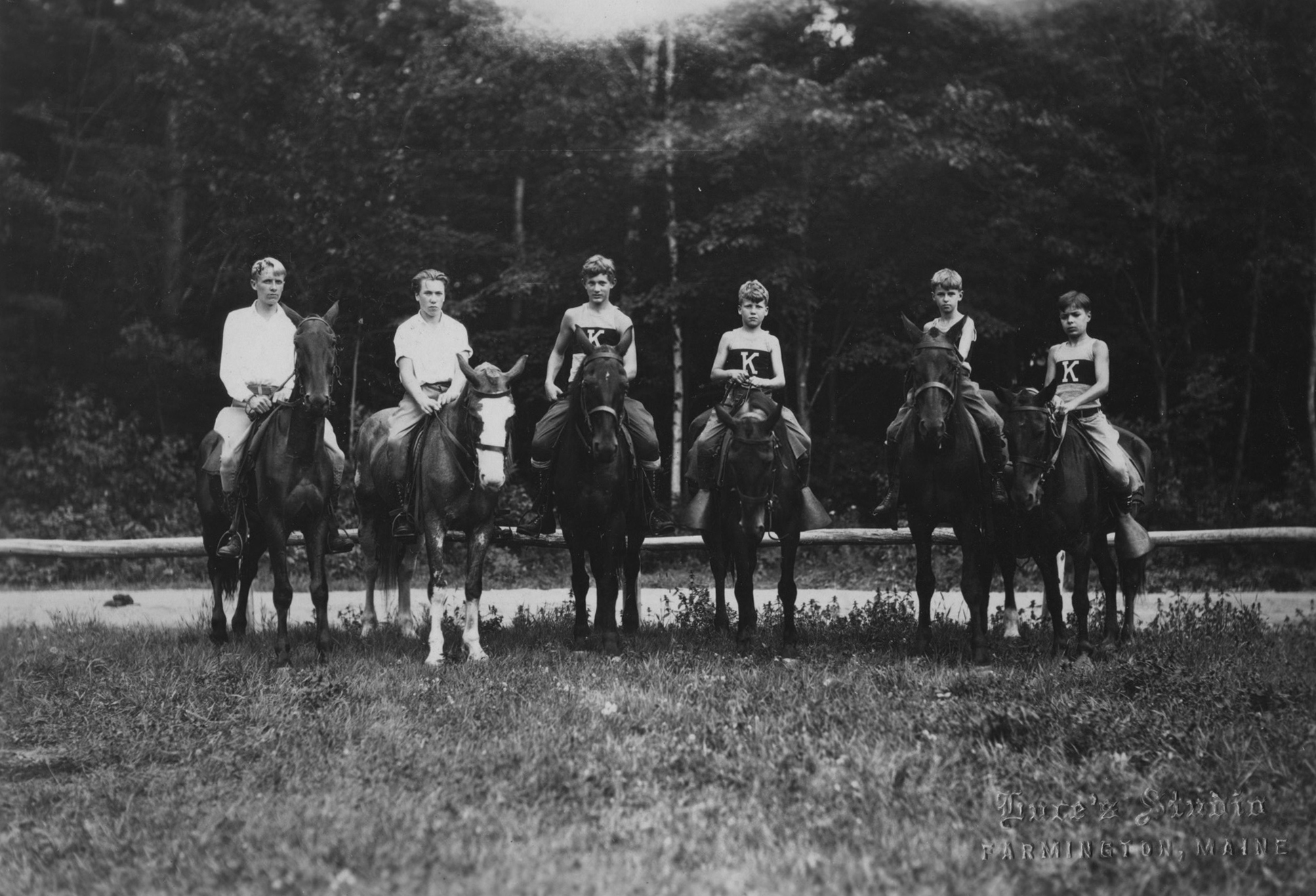
A group of boys poses on horseback. Horses were kept at a stable just down the road from camp. The 1933 catalog describes, “Beginners are taught in a riding oval with horses carefully trained for the work. There are brush jumps on the grounds over which the more experienced rider may learn to take his horse before the season closes.”
A counselor watches as campers wrestle on the athletic field.
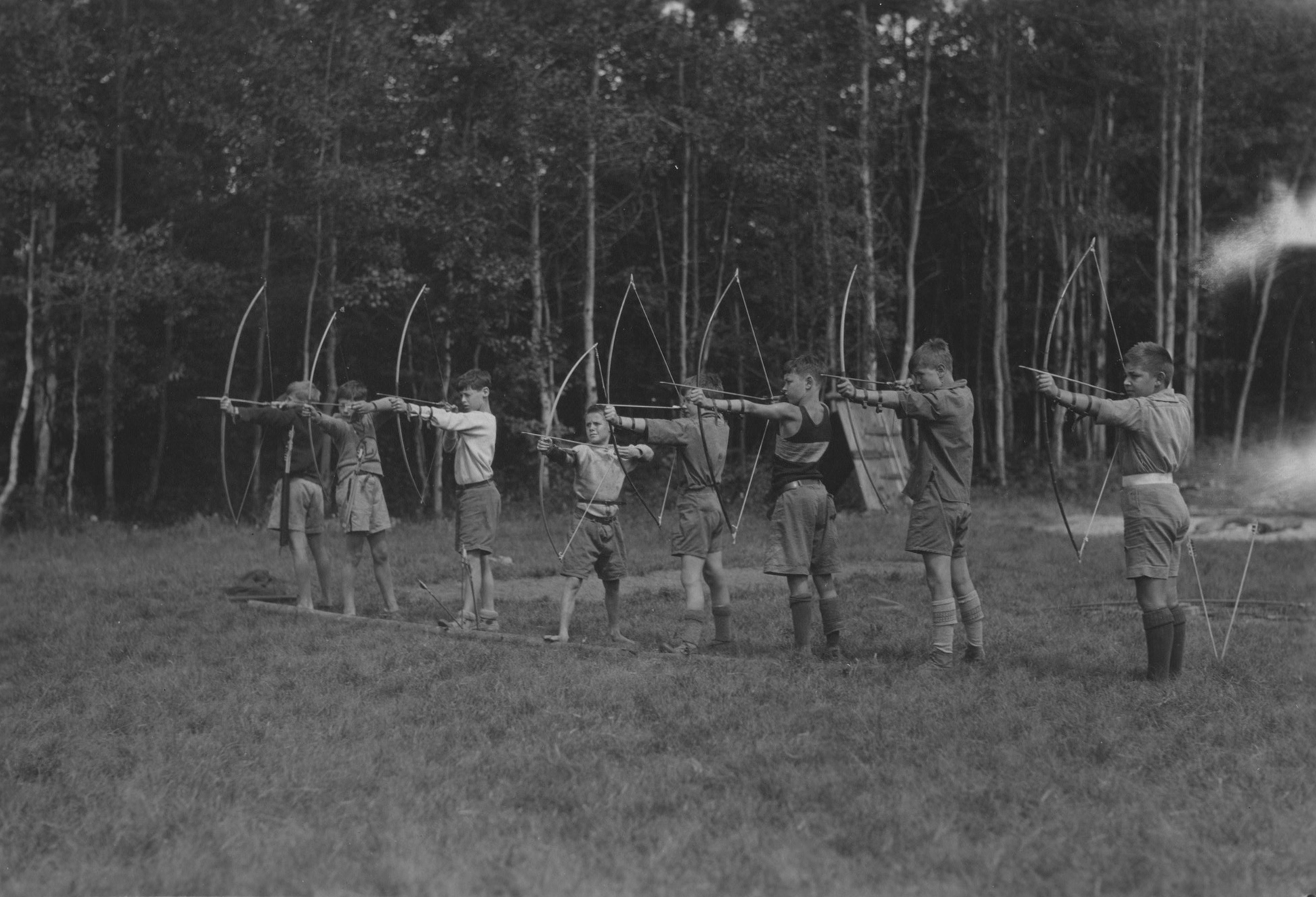
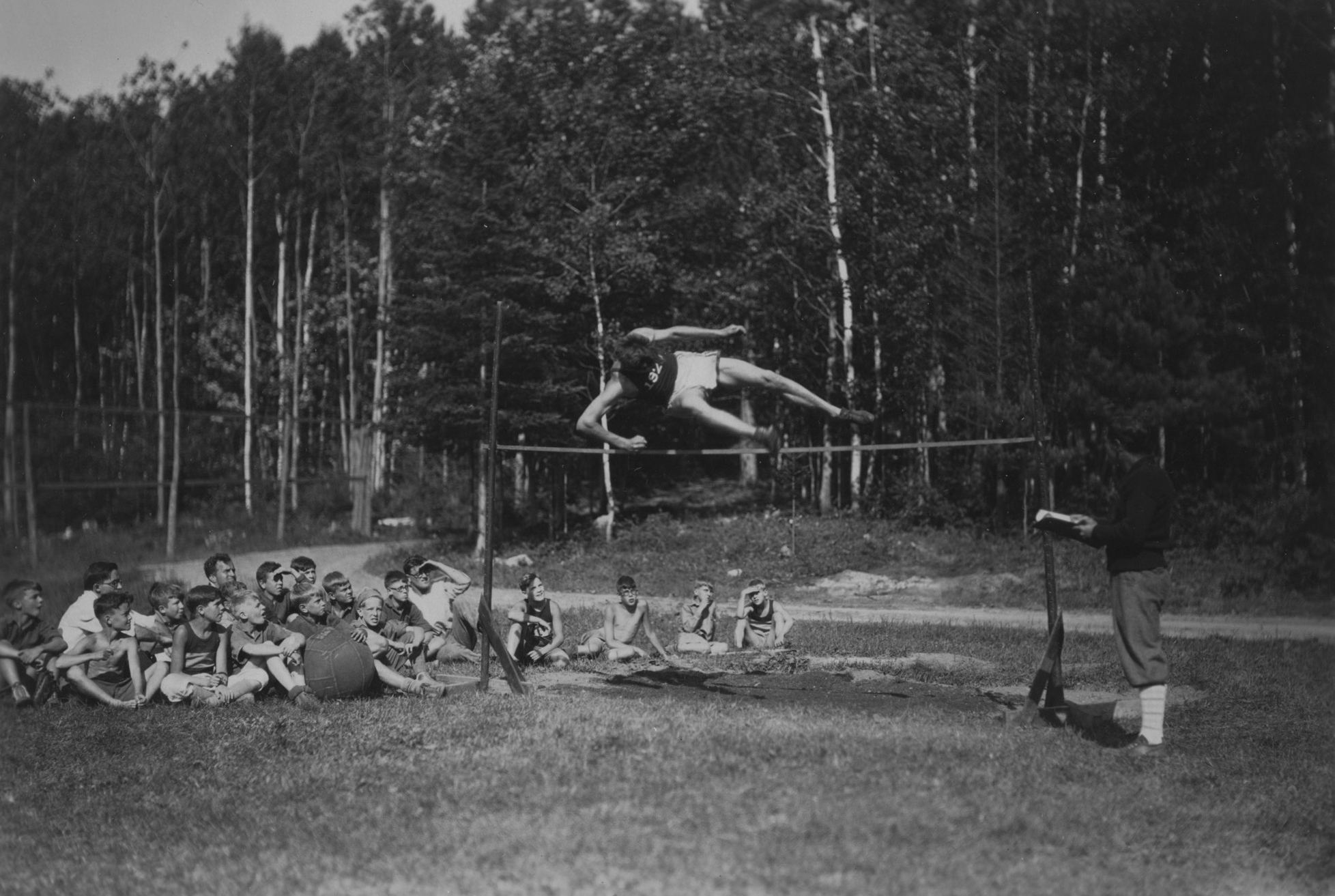
Boys shoot using lemonwood bows made in woodshop. The 1926 Catalog, in which this photo was first published, claims that “in many instances [these bows] were better than those purchased by the camp.”A counselor demonstrates the high jump. This photo was first published in the 1927 catalog.
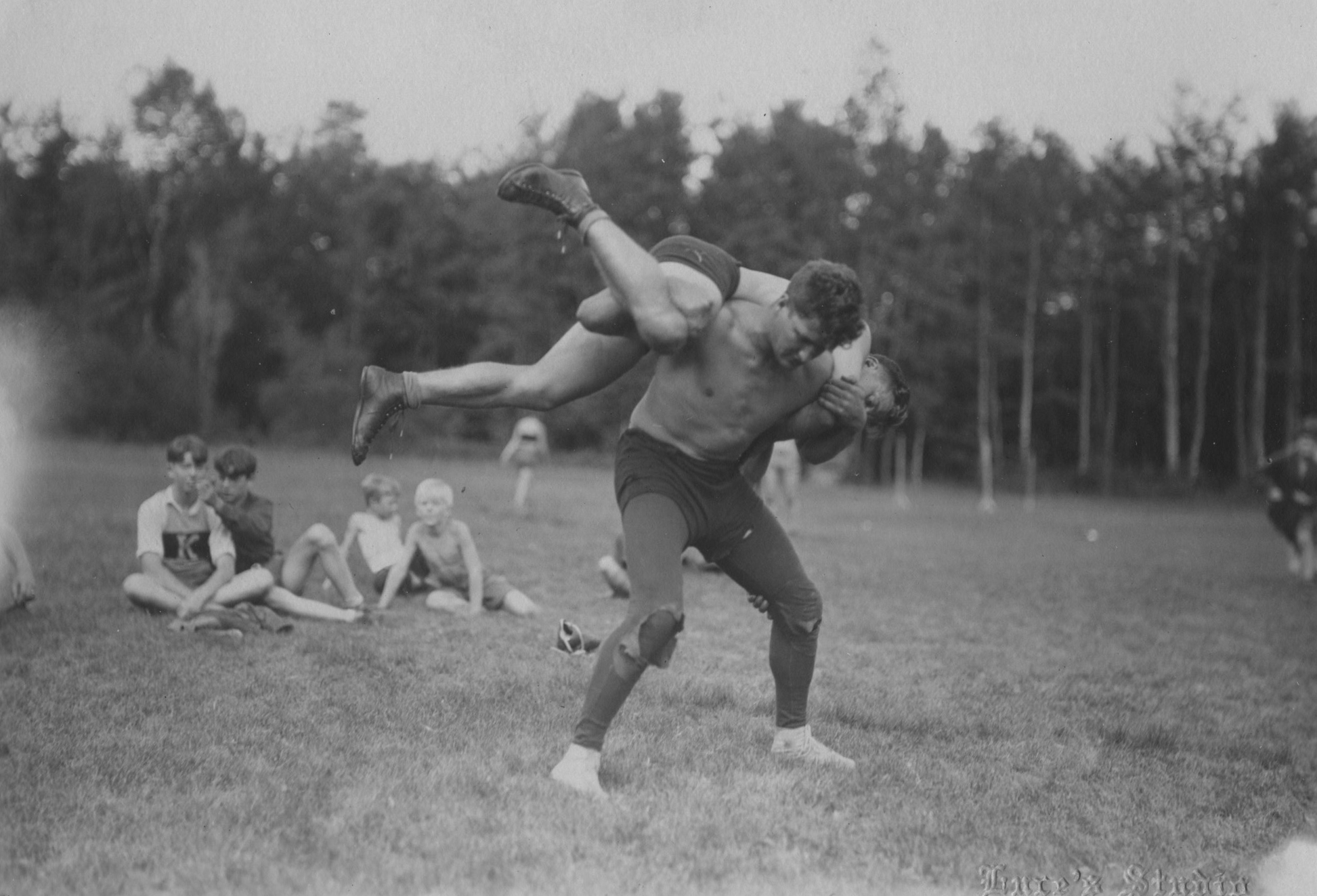
Counselors wrestle on the athletic field.
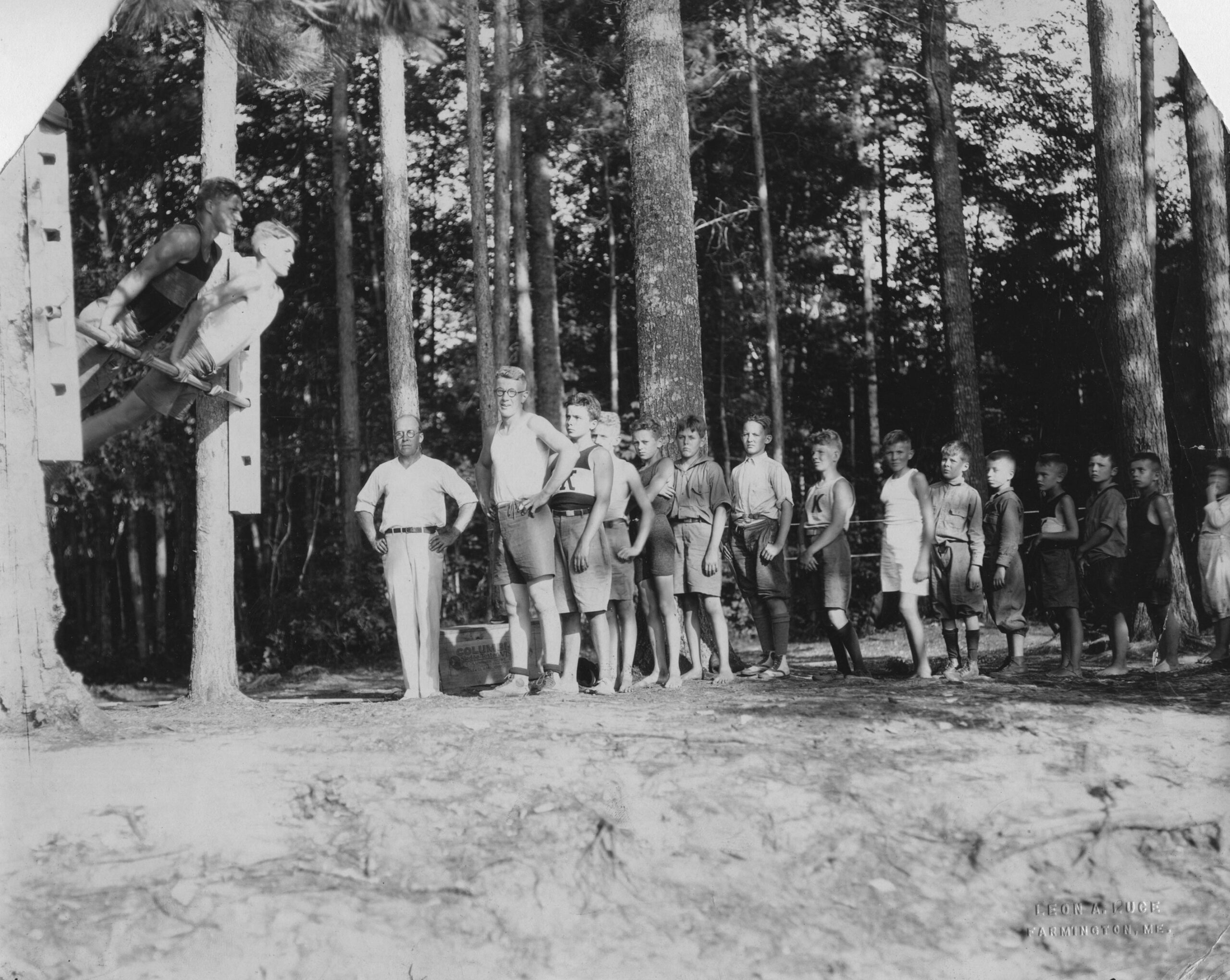
Two boys perform gymnastics in front of a crowd of friends. Campers learned both parallel and horizontal bars.
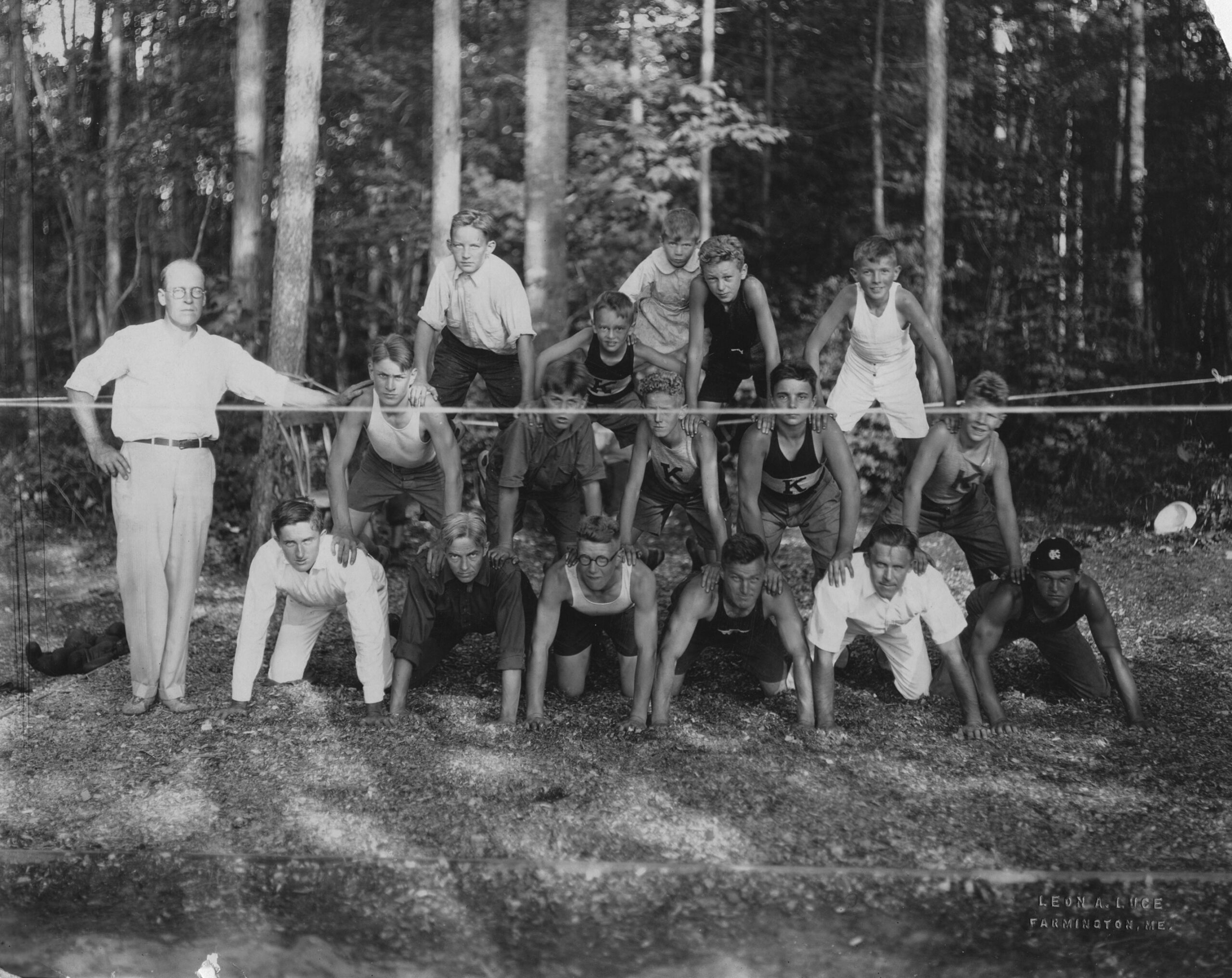
Campers form a pyramid in the outdoor wrestling ring as a counselor looks on.
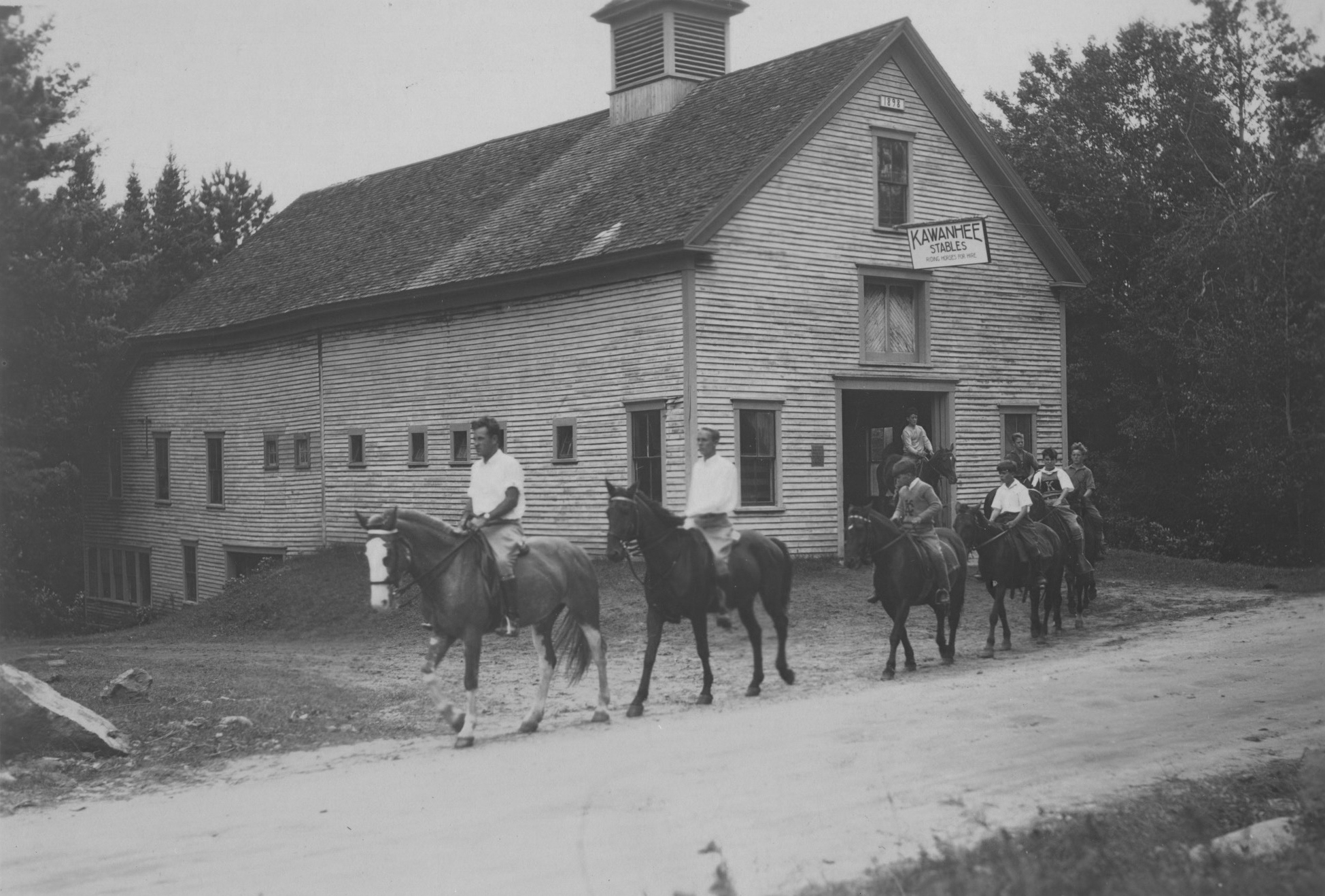
Campers lead their horses out of the stables. The 1930 catalog describes, “Our boys are taught how to ride easily and in good form. Appropriate games are played and long rides are taken through the woods, over the hills, and to many unfrequented and interesting places. A special effort is made to eliminate fear, which some boys have at the beginning of their riding experience, and to instill in each one a sense of confidence when on or about his horse.”
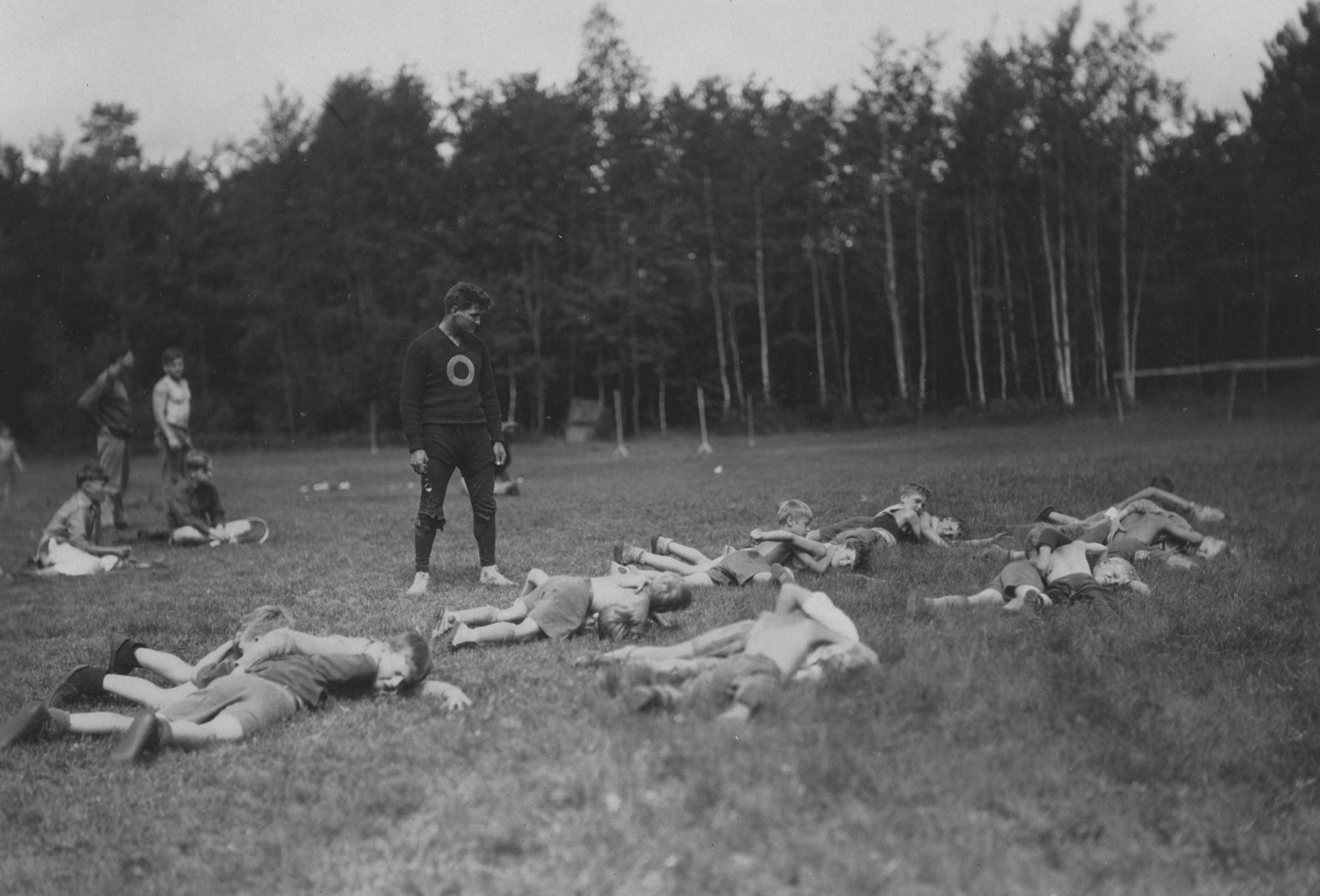
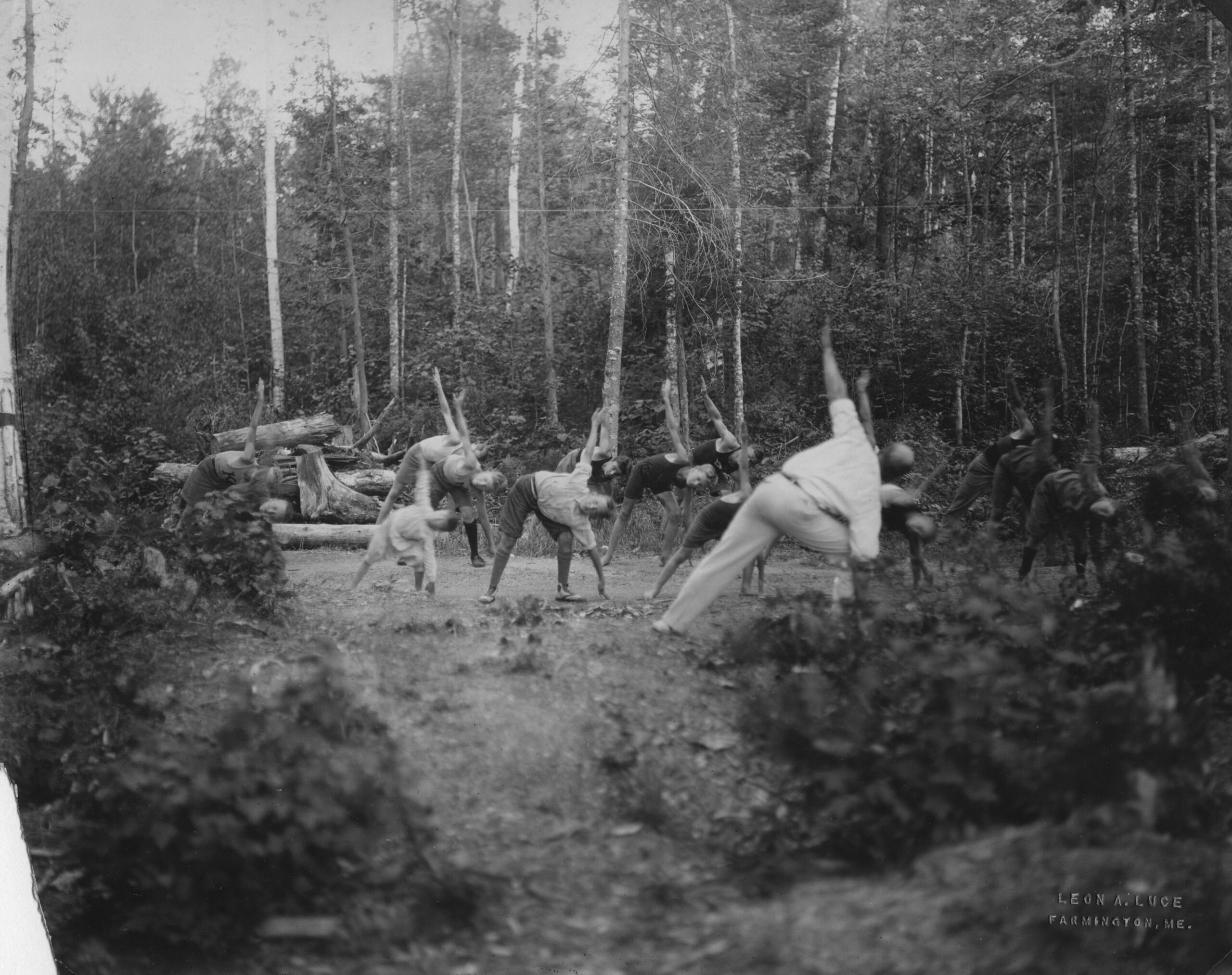
A counselor leads his campers in morning exercises.
Two boys box as a counselor and friends look on. The 1925 catalog states that boxing was a way in which boys acquired the art of self-protection
Stepping Inside
Though much of camp revolves around the outdoors, campers also enjoy indoor activities such as nature, woodshop and art.
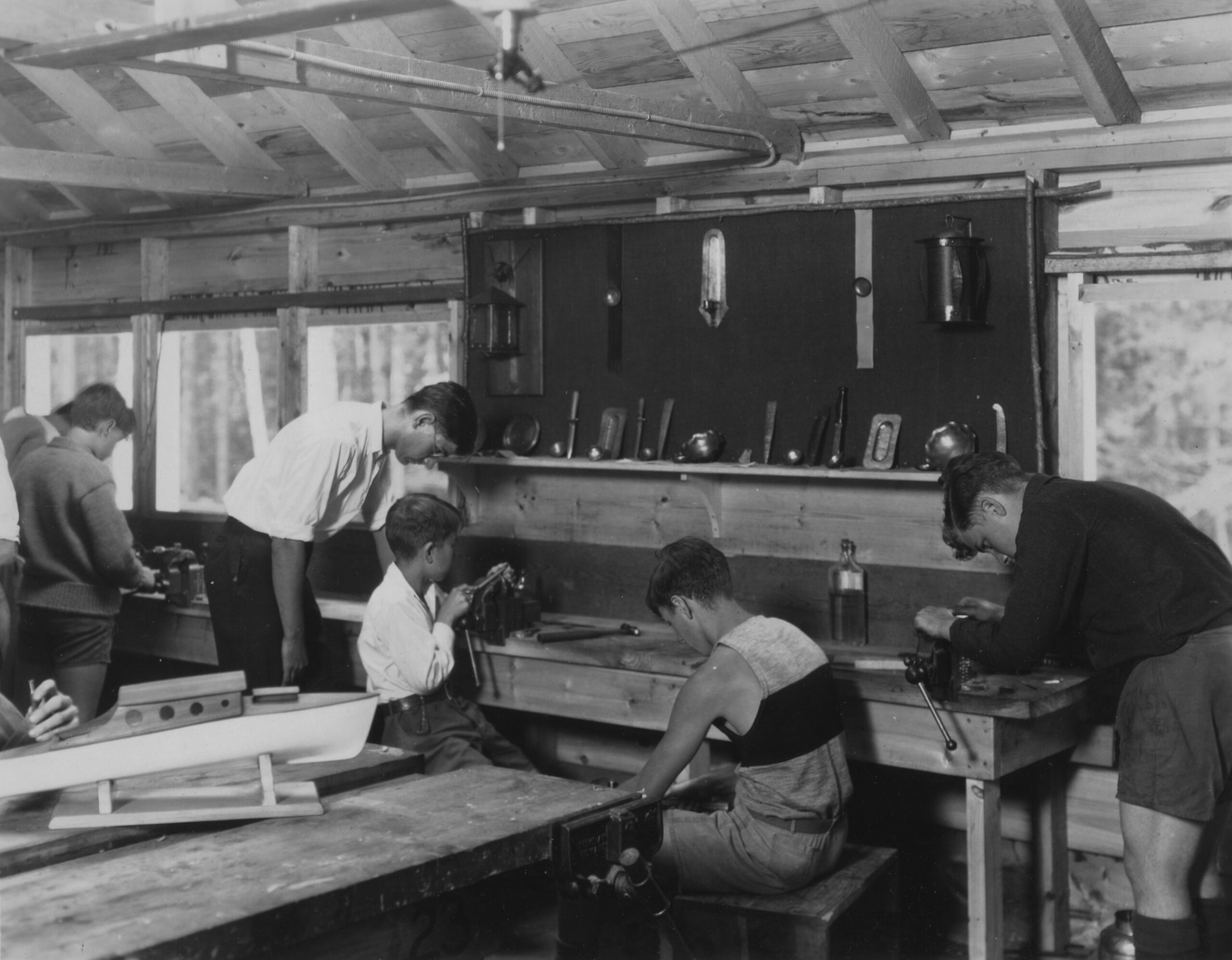
Campers work with metal in the woodshop. The 1933 catalog describes, “It is a pleasure and revelation to observe a room full of boys at work on a busy day. From one corner of the shop comes the sound of the forge and the ring of the anvil, as some young enthusiast fashions a hunting knife, wrought from bar-steel of finest quality. Across the room, other youngsters are making copper nut bowls and pewter plates for mother, ash trays for dad, artscraft lanterns, paper knives and beautiful book ends, etched or pierced in heavy brass and pewter.”
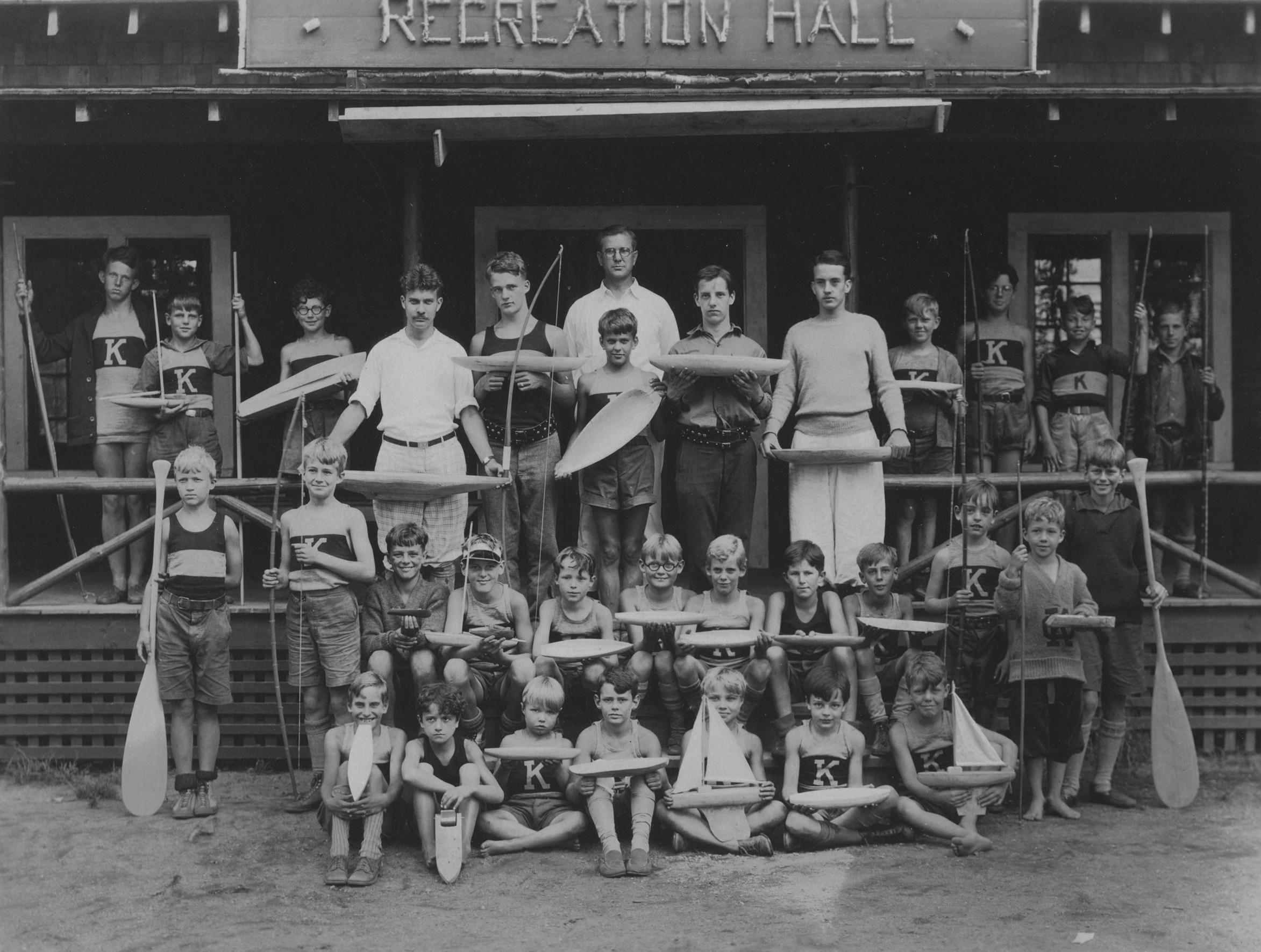
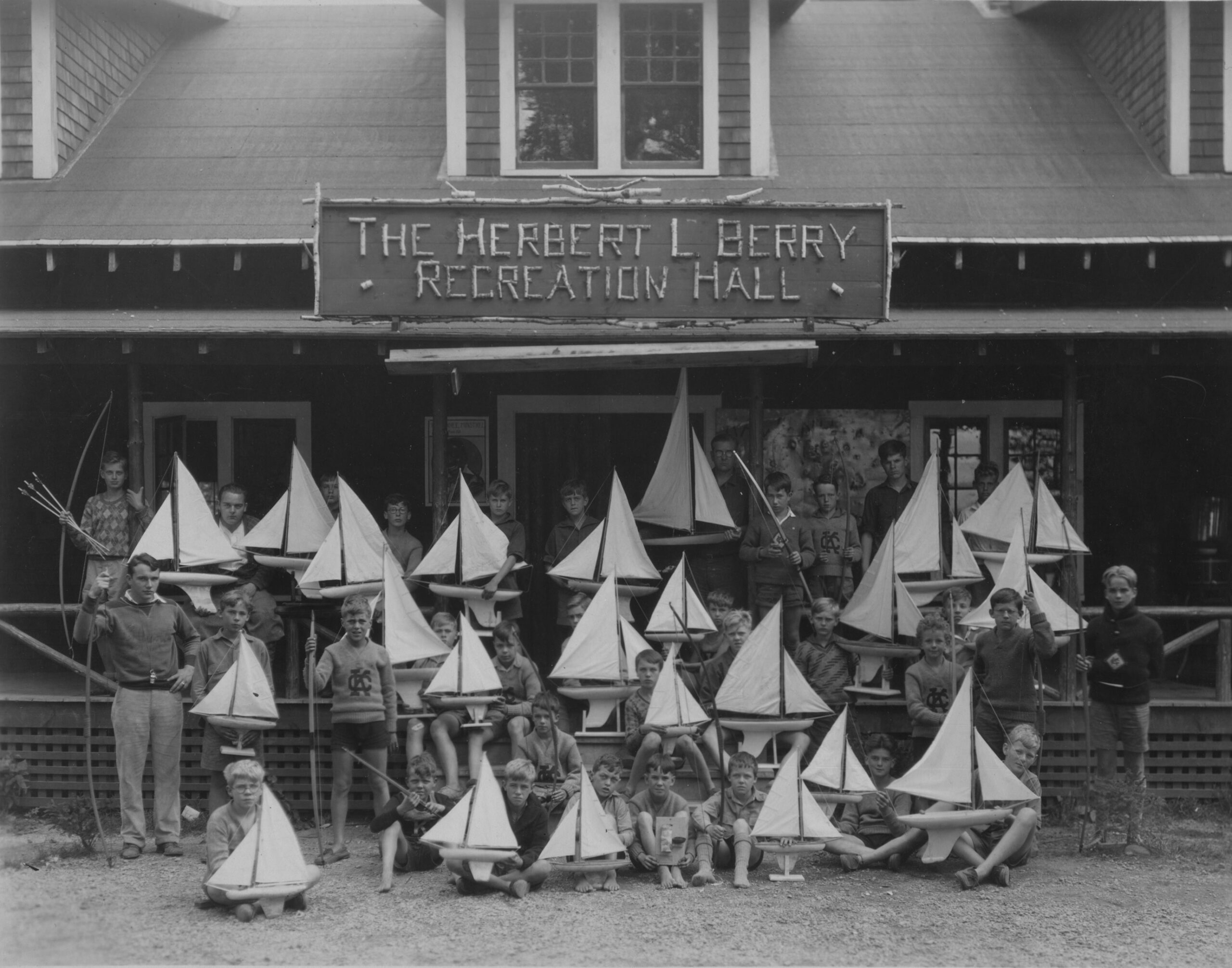
Campers pose with the paddles, bows and boats that they’ve made in woodshop.
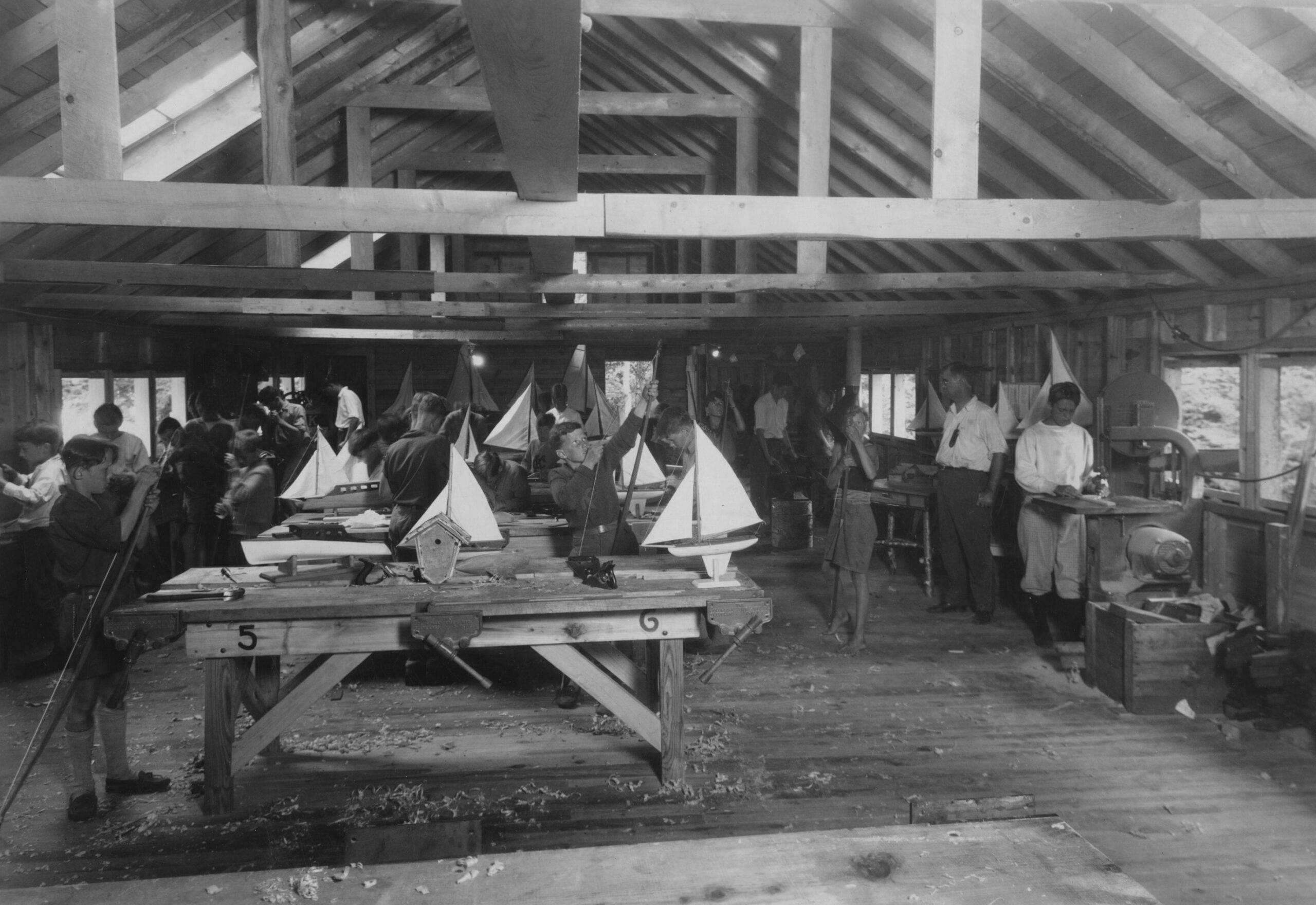
Campers work hard in the woodshop, which accommodates 65 boys at a time. A caption in the 1926 catalog describes, “Our shop is one of the busiest places in camp, especially on rainy days. Many happy and profitable hours are spent here during the season. An experienced teacher of Manual Training is in charge. A complete outfit of tools is furnished. No attempt is made to present a formal course. The boy-project is our chief concern. A ‘job well done’ is emphasized in all instances.”
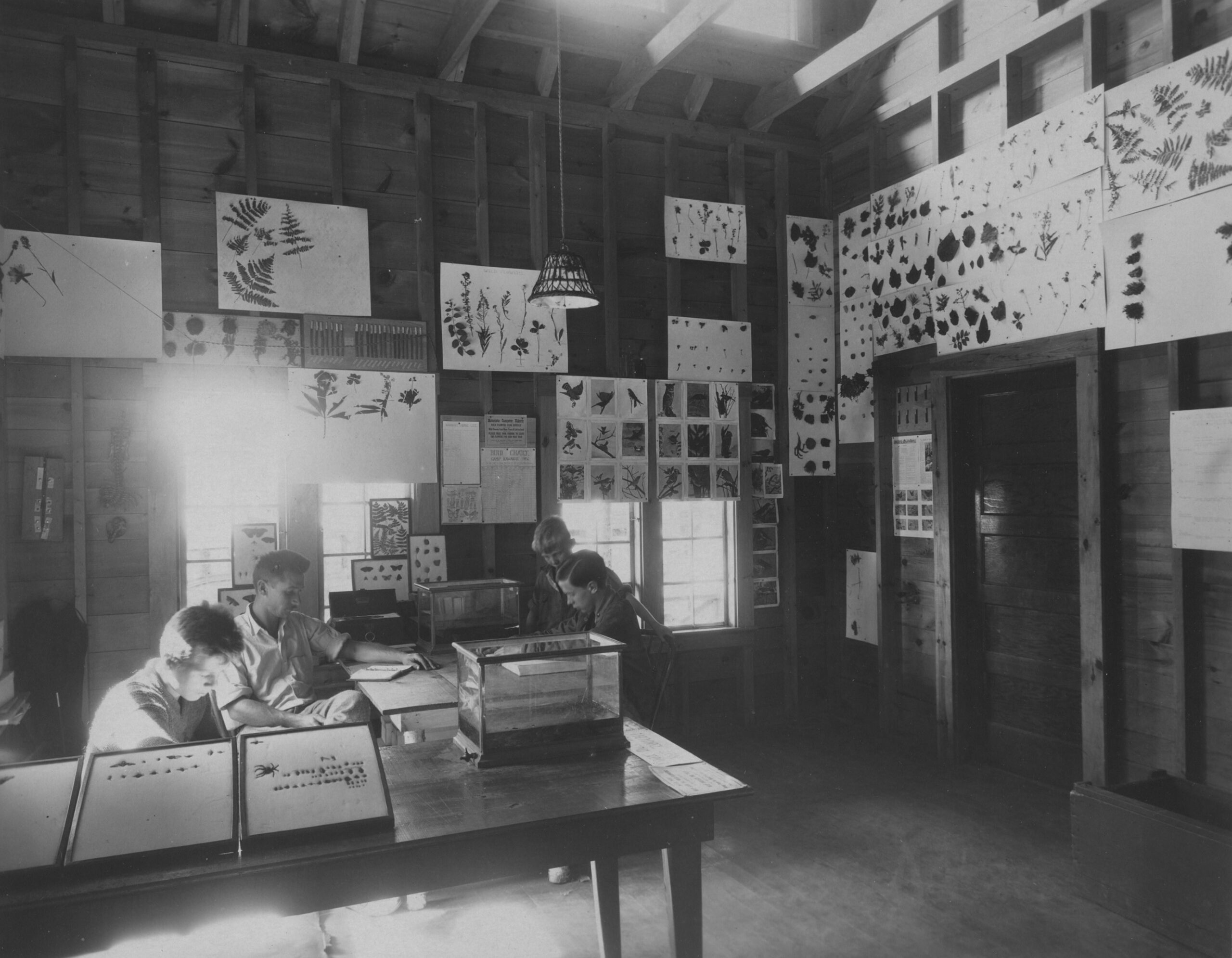
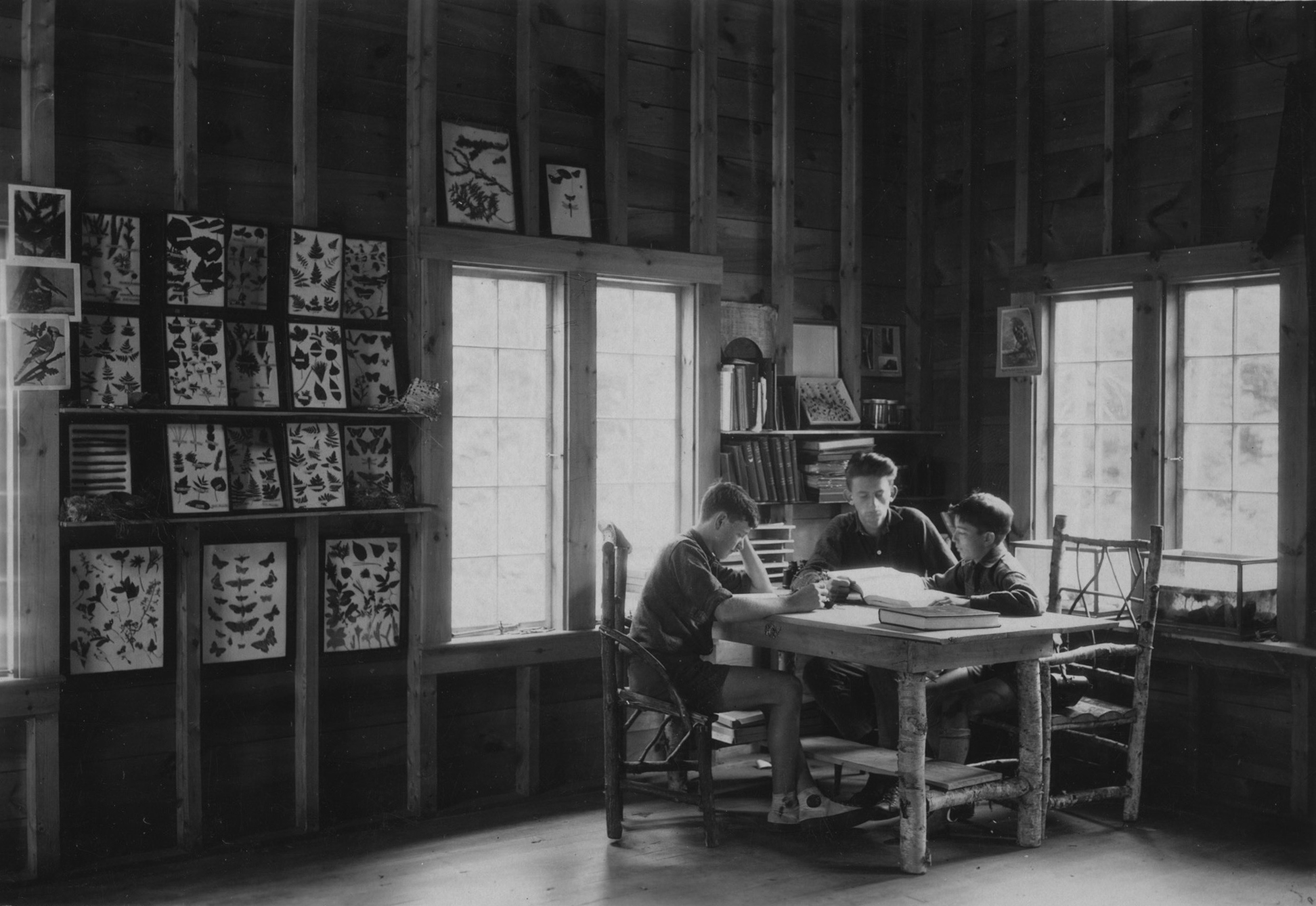
Boys “unravel nature’s secrets” in the Nature Laboratory and Museum. According to the 1927 catalog, in which this photo was first published, “The beginner learns to common trees, flowering plants, insects and birds. The boy who is farther advanced may collect and study in detail any of these groups. Amid such natural opportunities the campers sees and appreciates the wonderful Plan of Nature, which functions so efficiently all about him.”
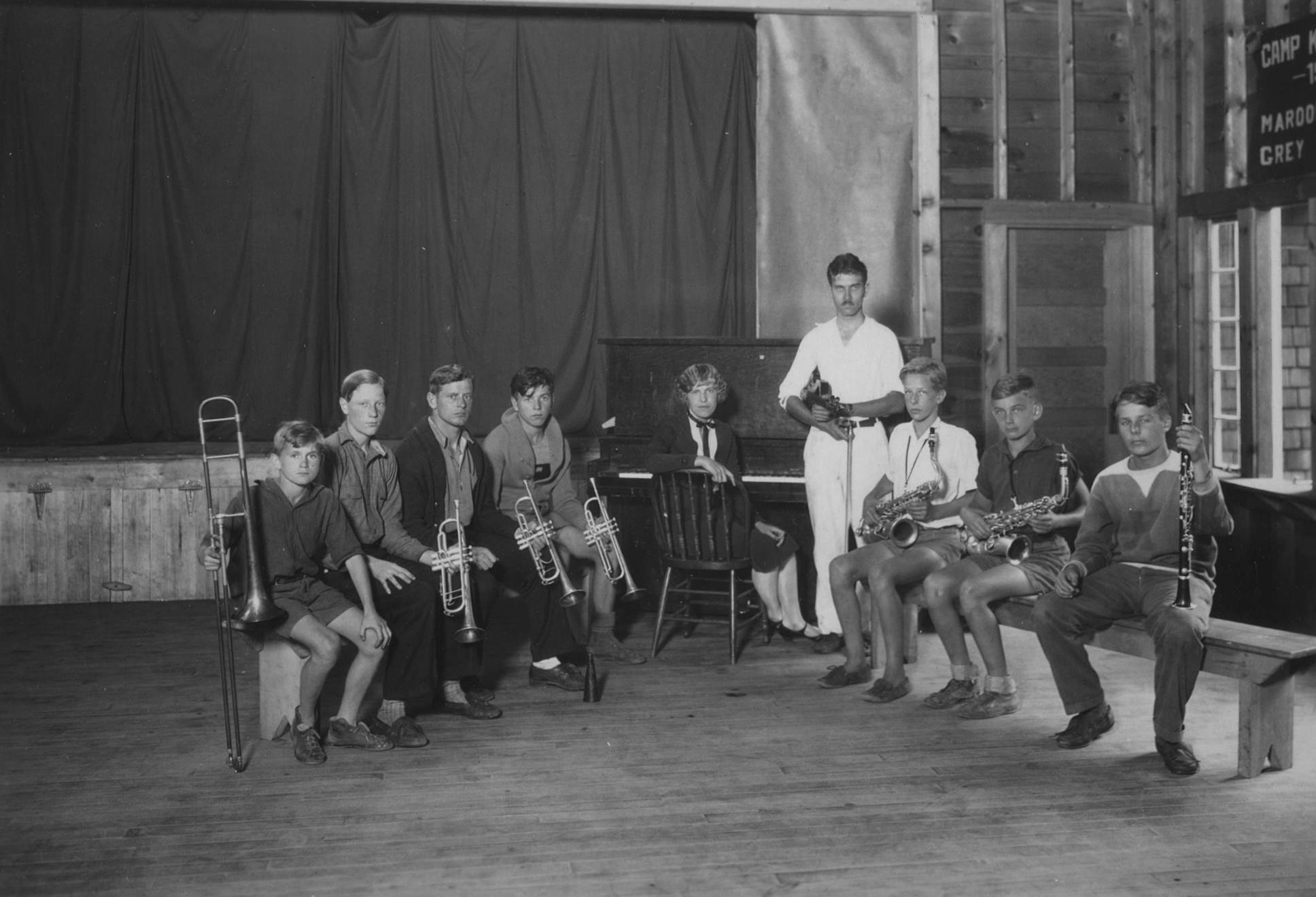
A group of campers poses with their instruments. According to the 1933 catalog, the camp orchestra performed each Thursday night. Boys also had the opportunity for individual tutoring in elementary music, with lessons offered in piano, violin, cornet and voice.
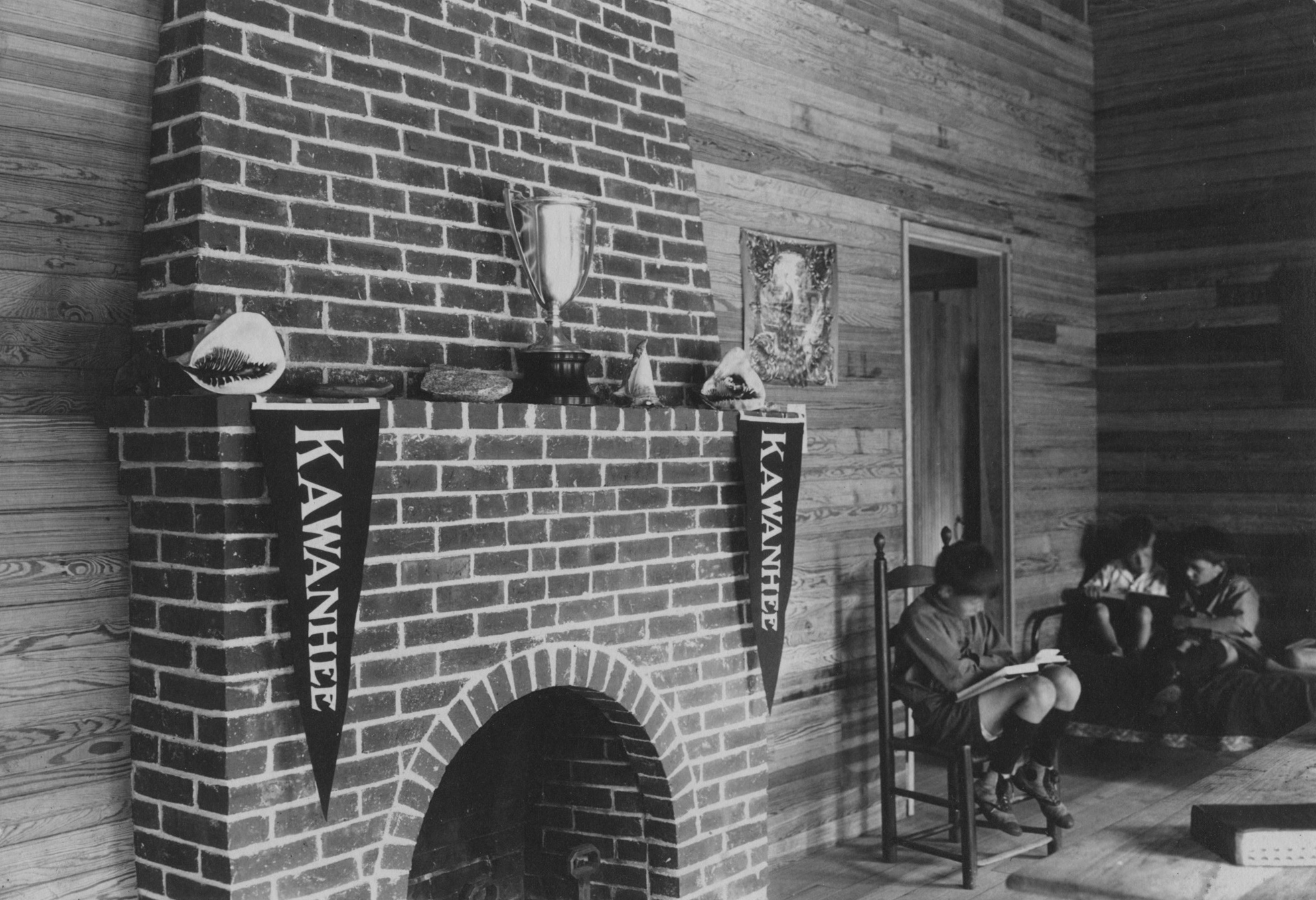
Campers take a break to read in the library.
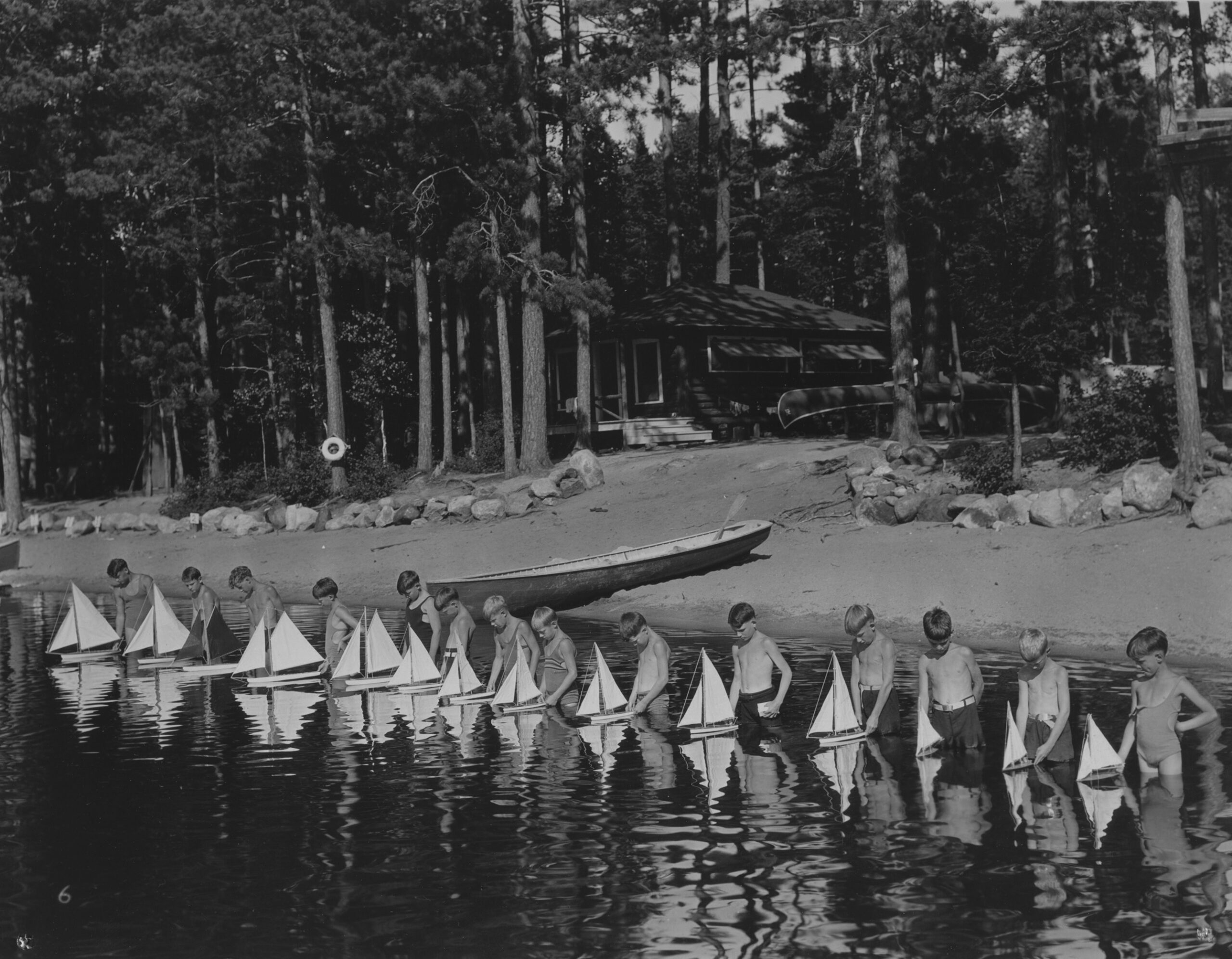
Campers pose with model boats made in woodshop. This photo was first published in the 1930 catalog. The caption describes that, “There is distinctive educational value in this type of hand work. Accuracy is stimulated, for a boy knows instinctively that a ‘lopsided’ boat will not sail properly. And that a better made boat will defeat the poorer made one.”
Boys study nature in a corner of the recreation hall. Photo published in the 1926 catalog.
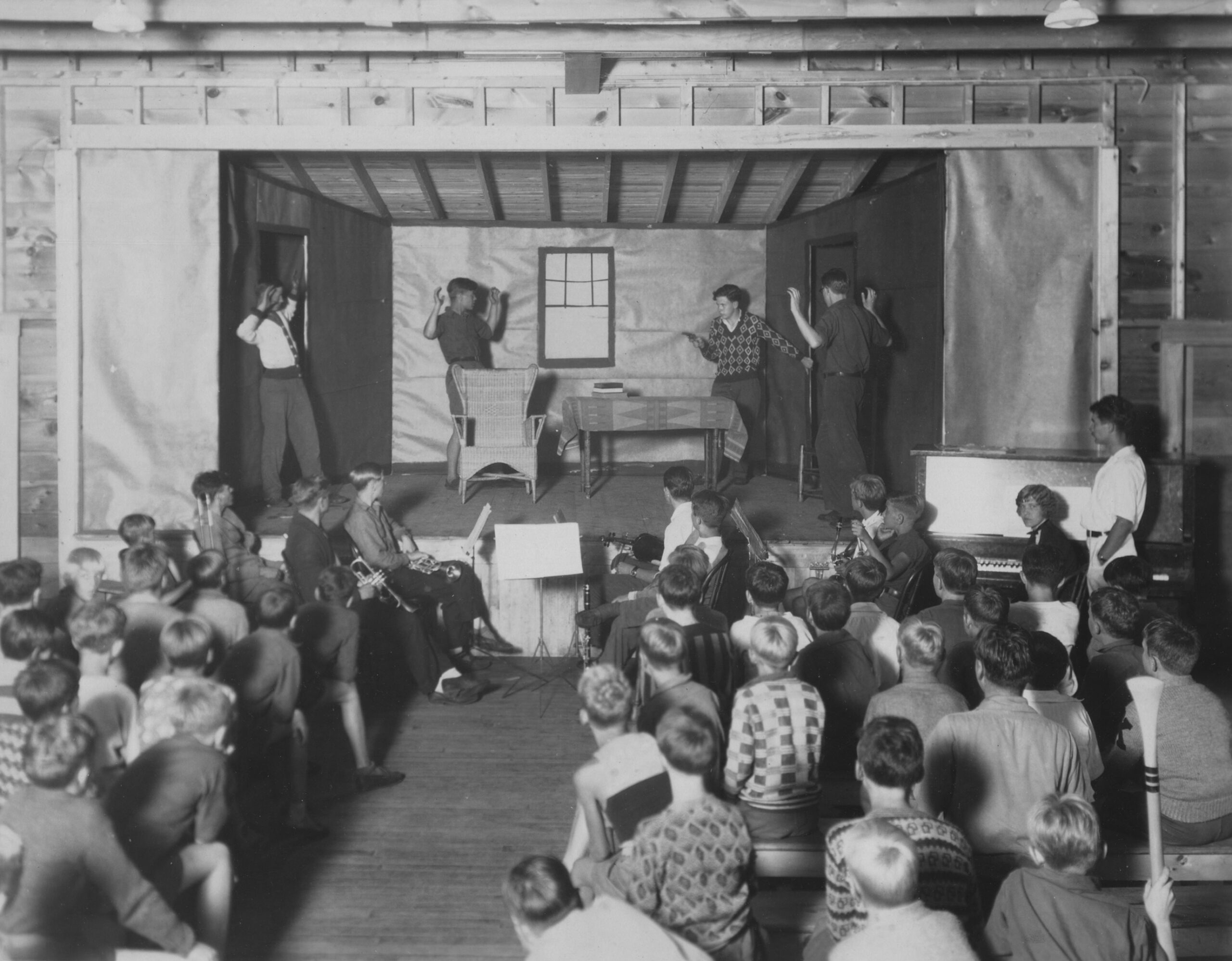
A group of boys performs for their peers on a stage in the recreation hall. First pictured in the 1930 catalog, the caption for this image reads, “Dramatics is featured throughout the season. Every boy in camp has an opportunity to ‘strut his stuff’, and takes part with his lodge group in one of the weekly stunt nights. A competitive night is held near the close of the season.”
On the Waterfront
Lake Webb is what attracted the Frank brother to Kawanhee initially and it remains one of the most beloved parts of camp. Boys enjoy a variety of activities on the lake, from sailing to swimming to water skiing. When it’s someone’s birthday, it’s camp tradition to throw them into the lake! (If they’re willing, of course.)
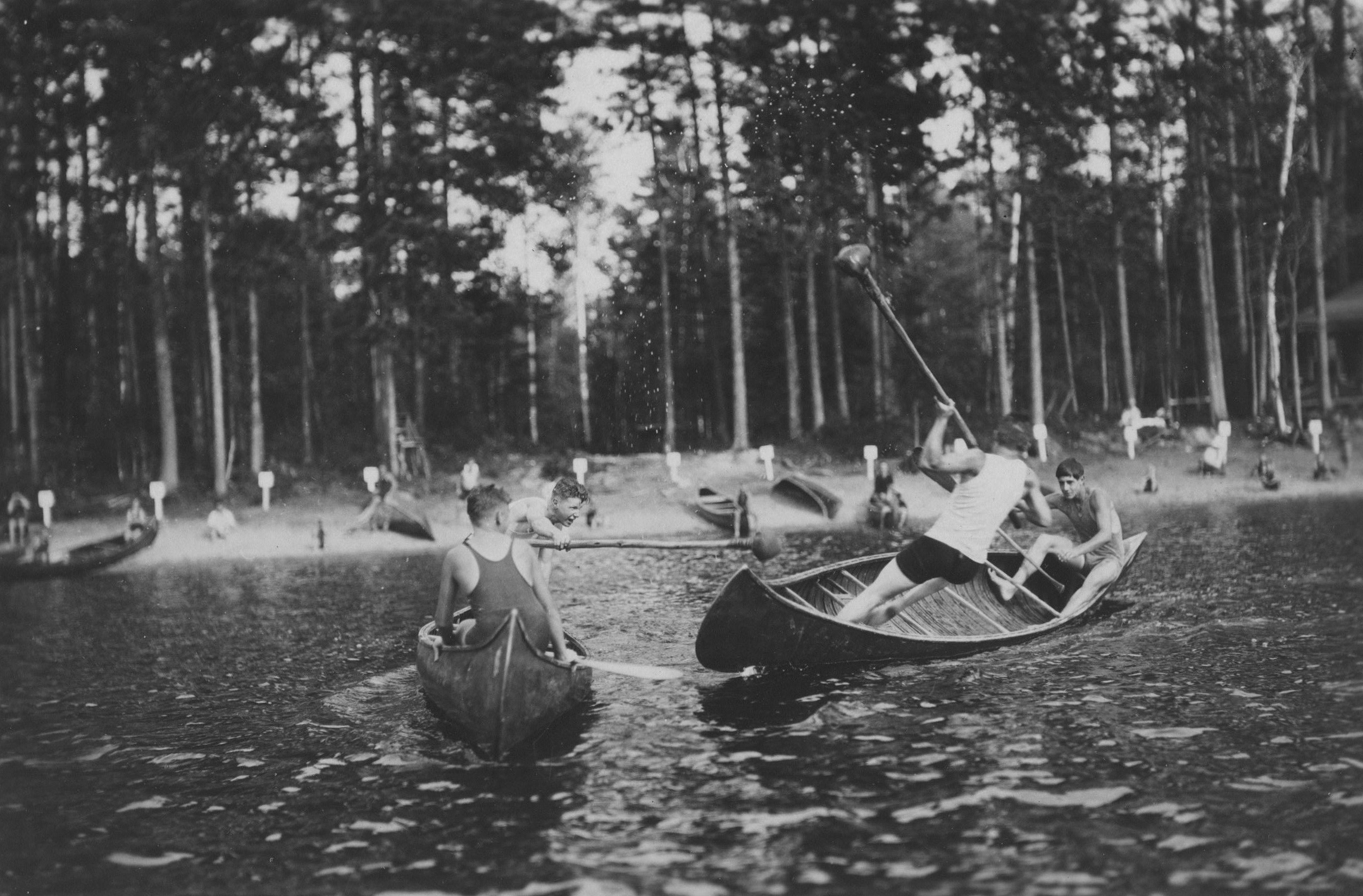
Published in the 1924 catalog with the caption “Canoe tilting – just before the splash.”
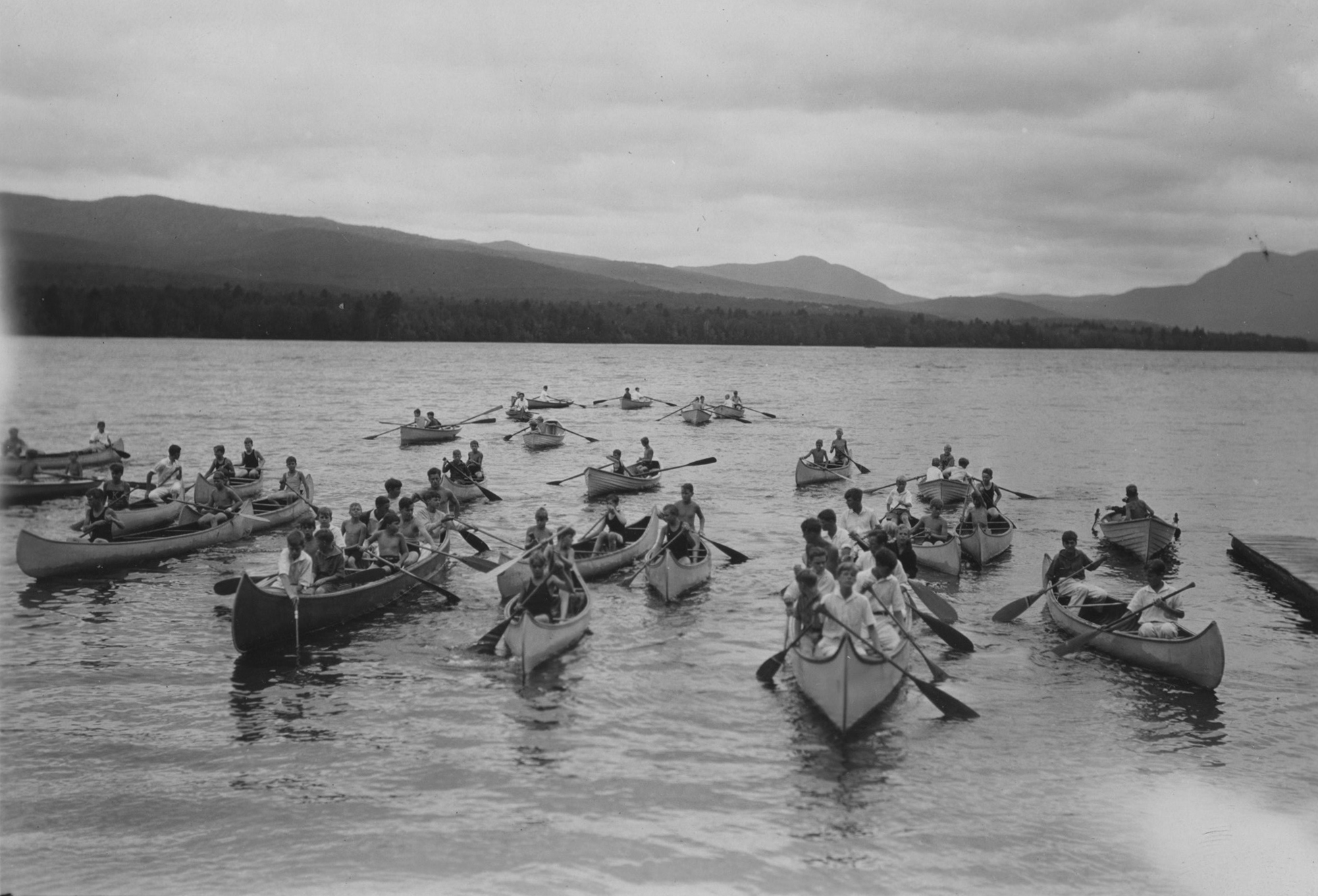
Campers canoe on Lake Webb.
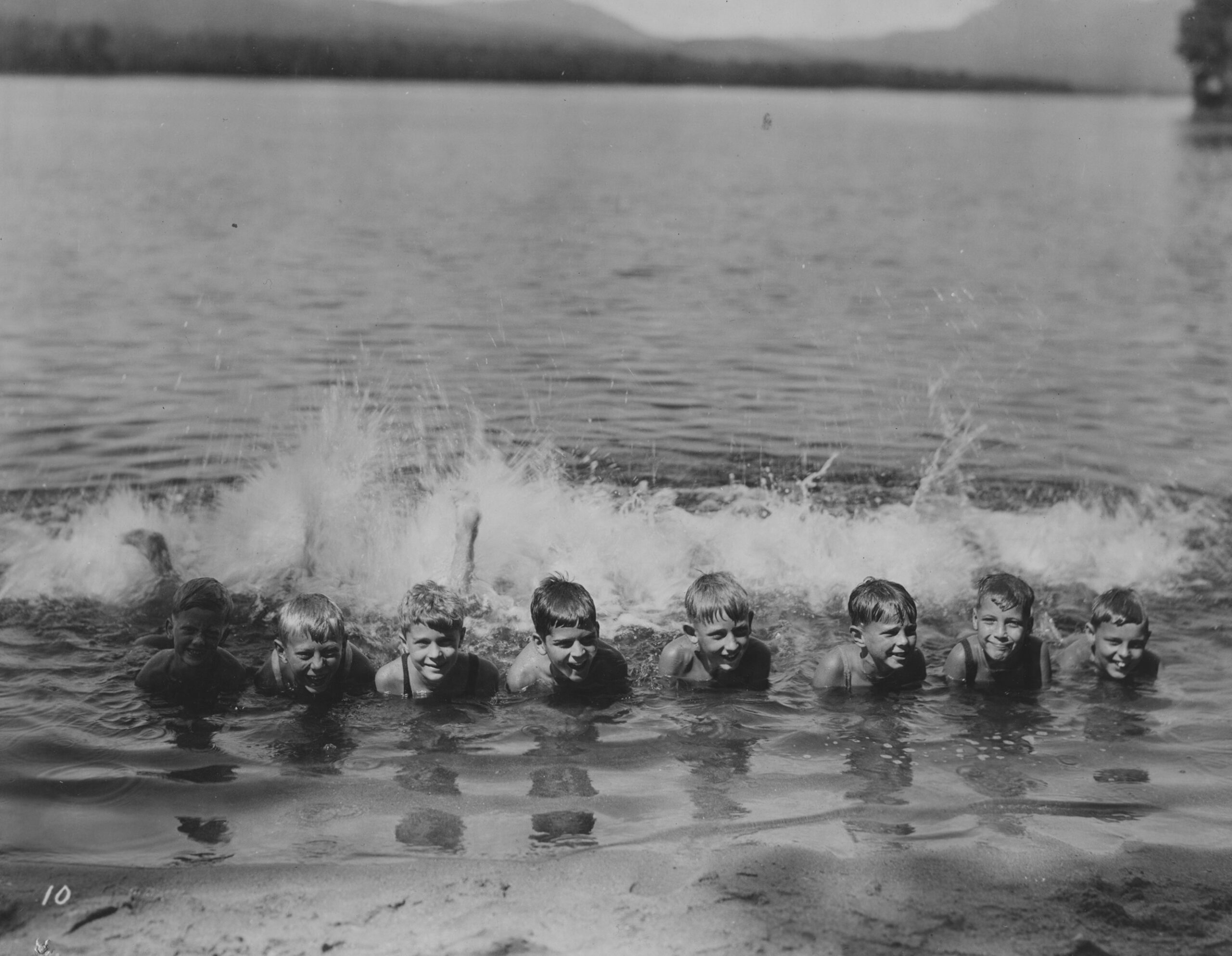
A group of non-swimmers poses for the camera at the beginning of the 1929 camp season. According to the 1929 catalog, in which this photo was first published, all of the boys successfully learned to swim: “Several swam the lake in front of camp, 1/2 mile, and passed their canoe and rowboat tests, youngest boy six years old.” The catalog also claims, “With but one exception in nine years, our instructors have never failed to teach a boy to swim during the season.”
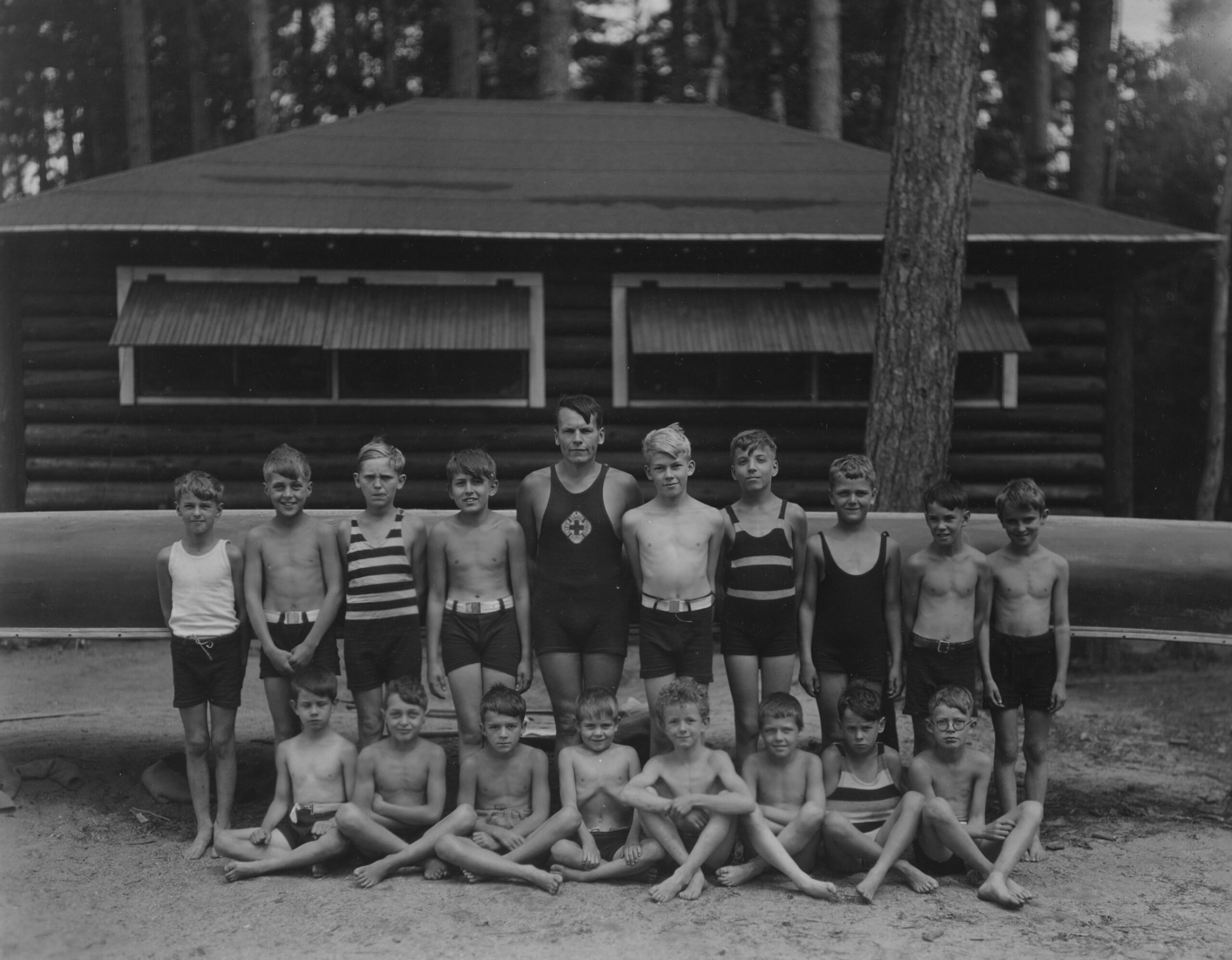
First published in the 1933 catalog, this image shows, “a group of healthy, happy youngsters under ten years of age. Each boy learned to swim, row a boar, and paddle a canoe.”
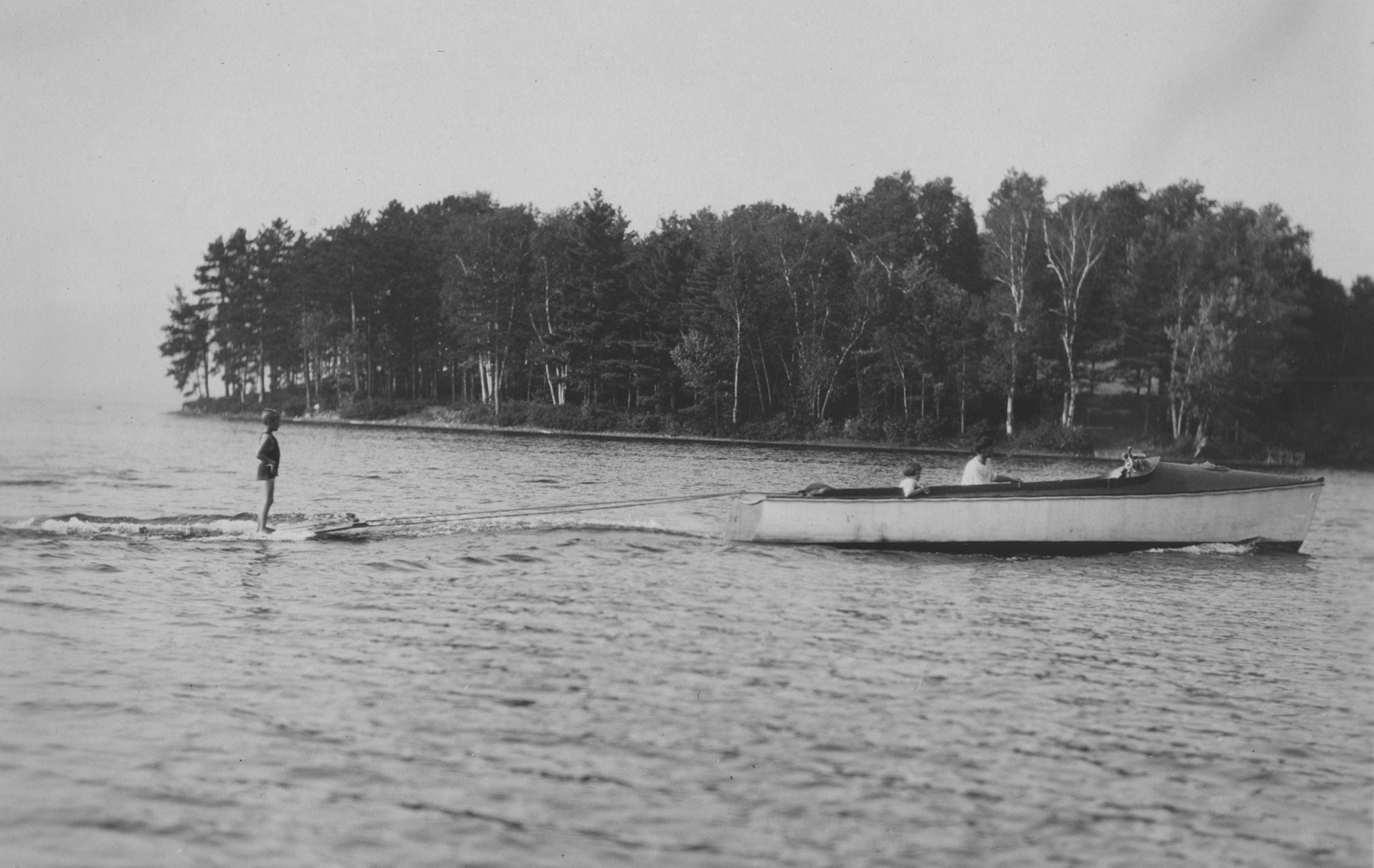
A boy water skis across Lake Webb.
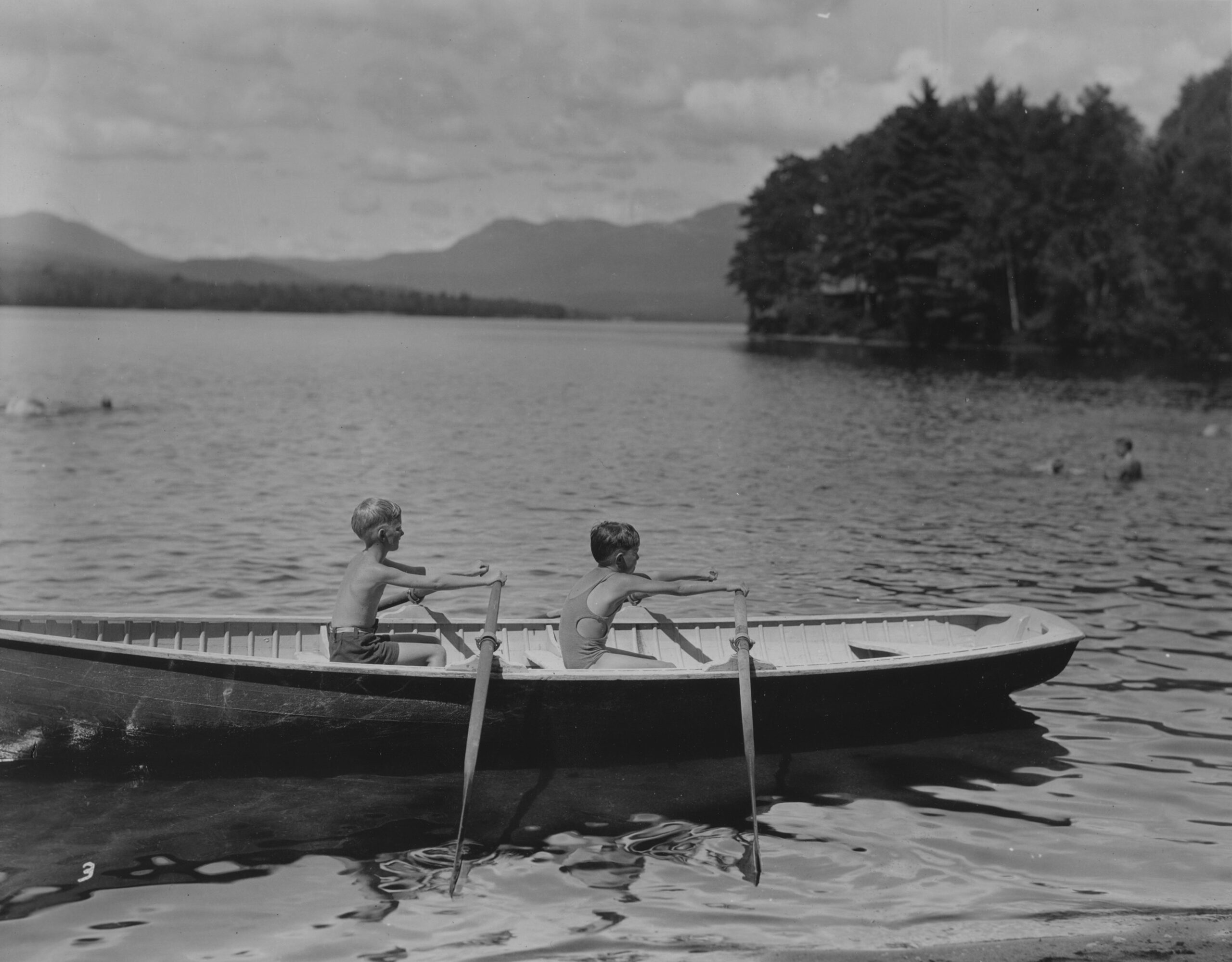
A pair of campers enjoys a ride in a rowboat.
A counselor demonstrates proper kicking technique to counselors learning how to swim. Published in the 1925 catalog.
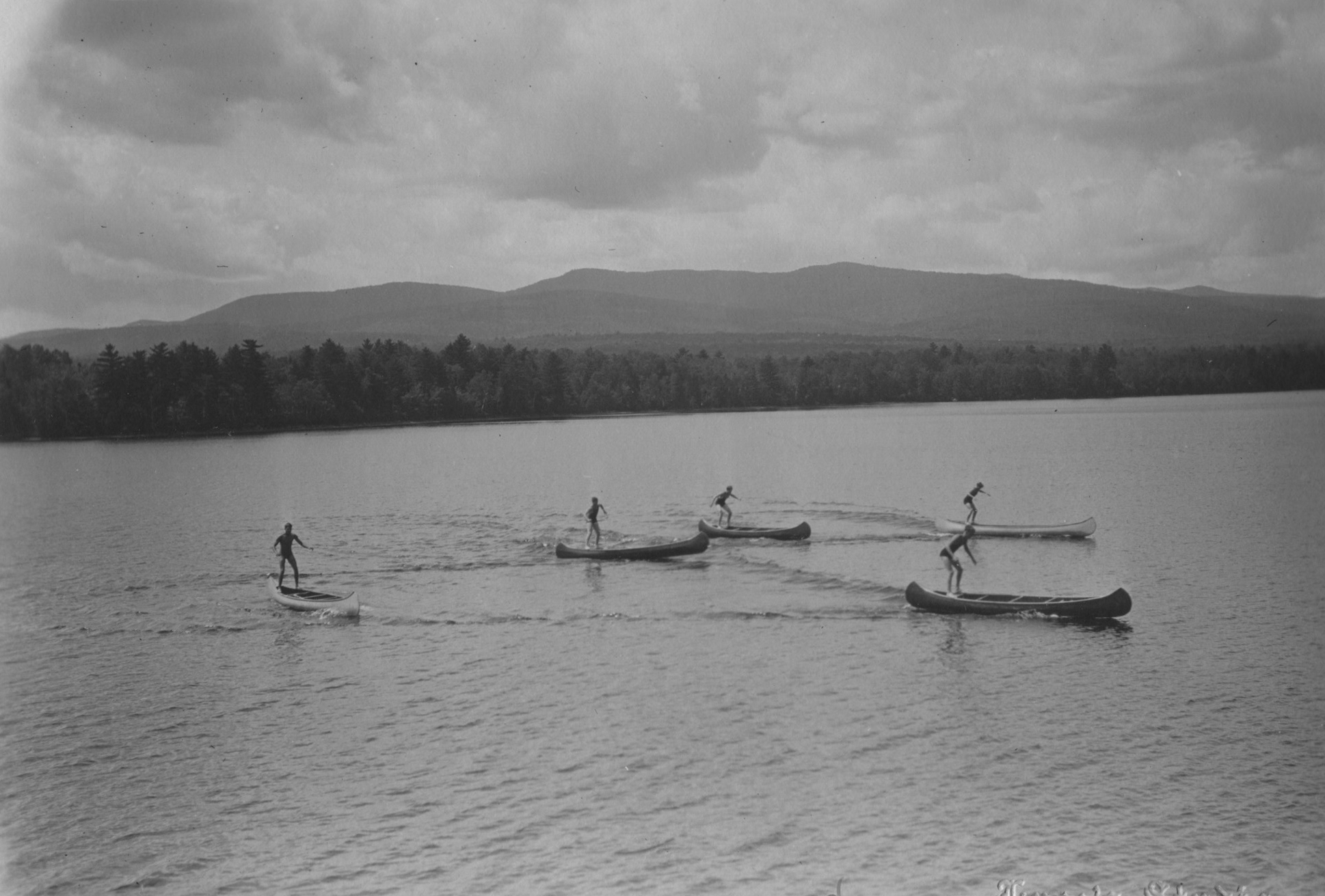
The two teams, Greys and Maroons, compete in canoe bobbing. This sport requires “courage and perfect balance,” according to the 1935 catalog.
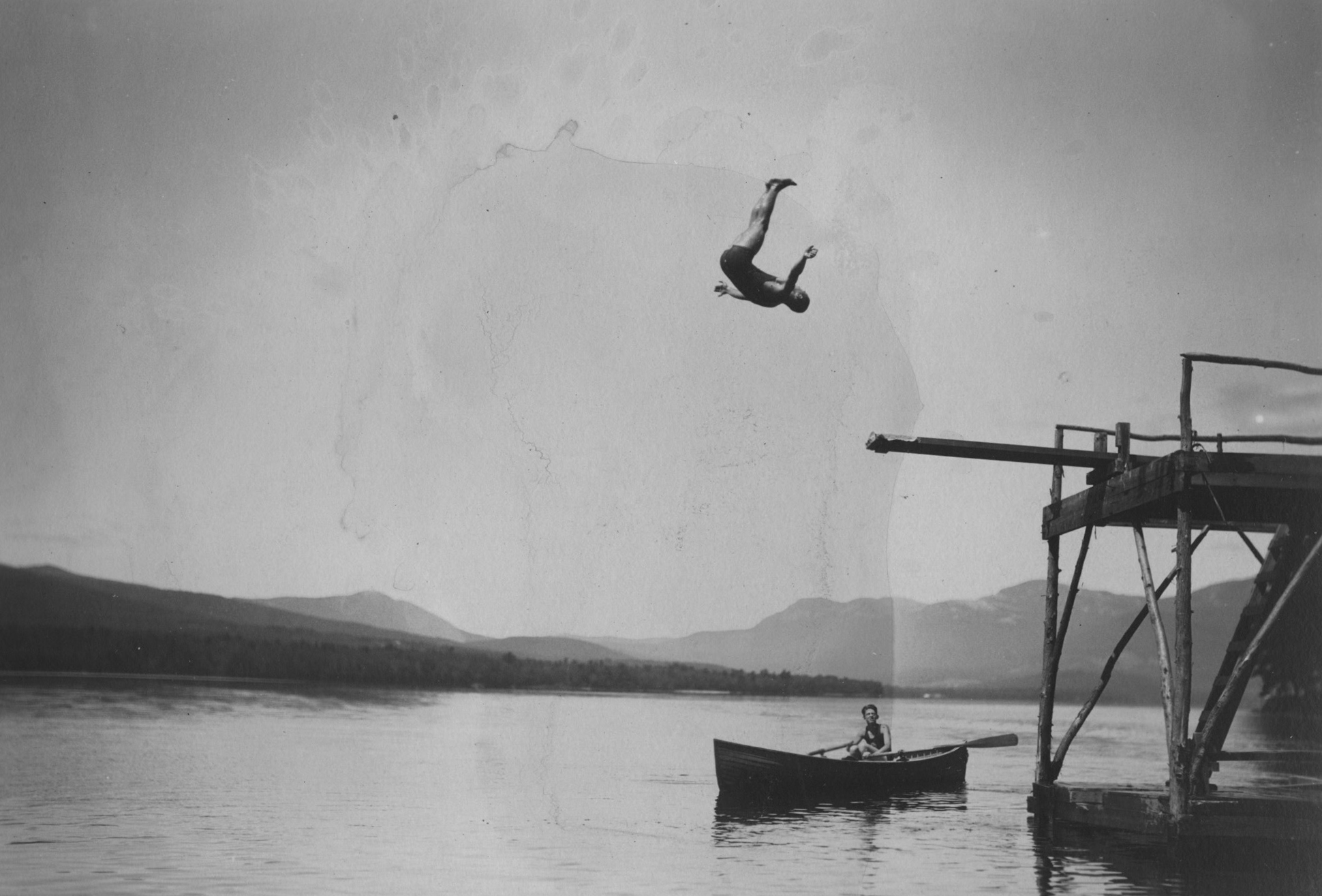
A boy flips off of a 12 foot high dive while a friend in a canoe admires his form.
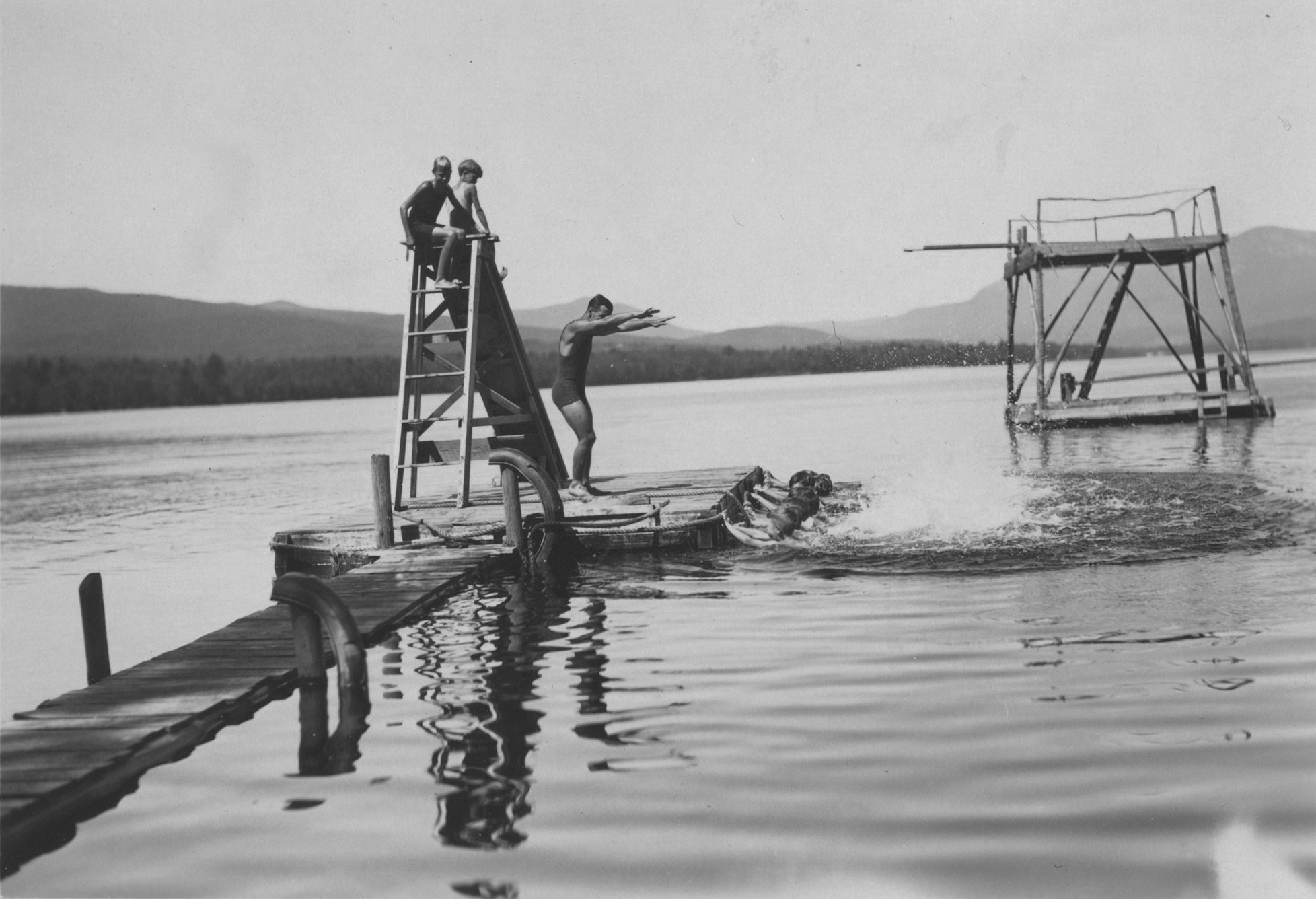
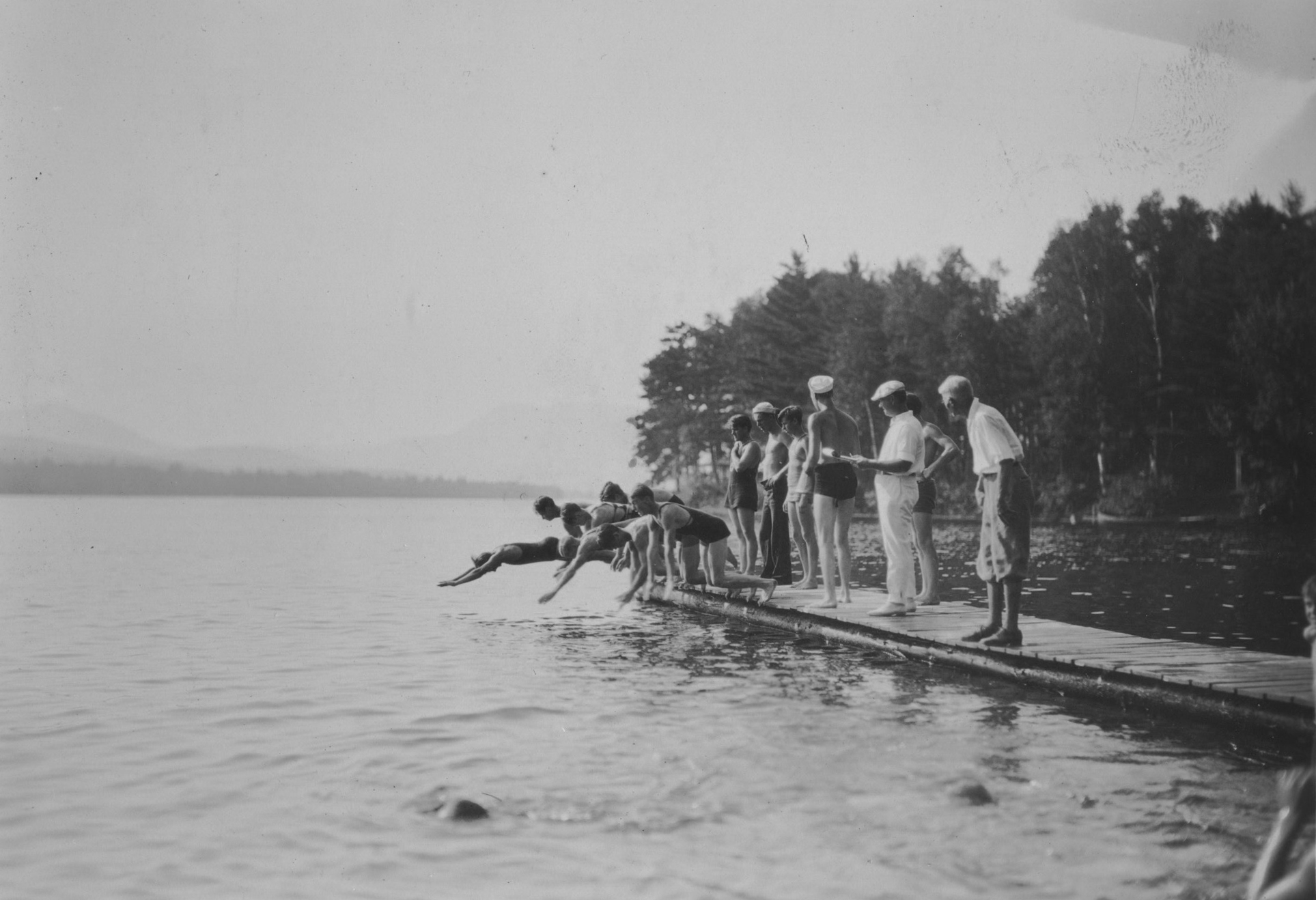
A line of swimmers dives off of one of the docks.
Miscellaneous
The following photos offer a peek at unique aspects of Kawanhee life that took place outside of the designated activity periods.
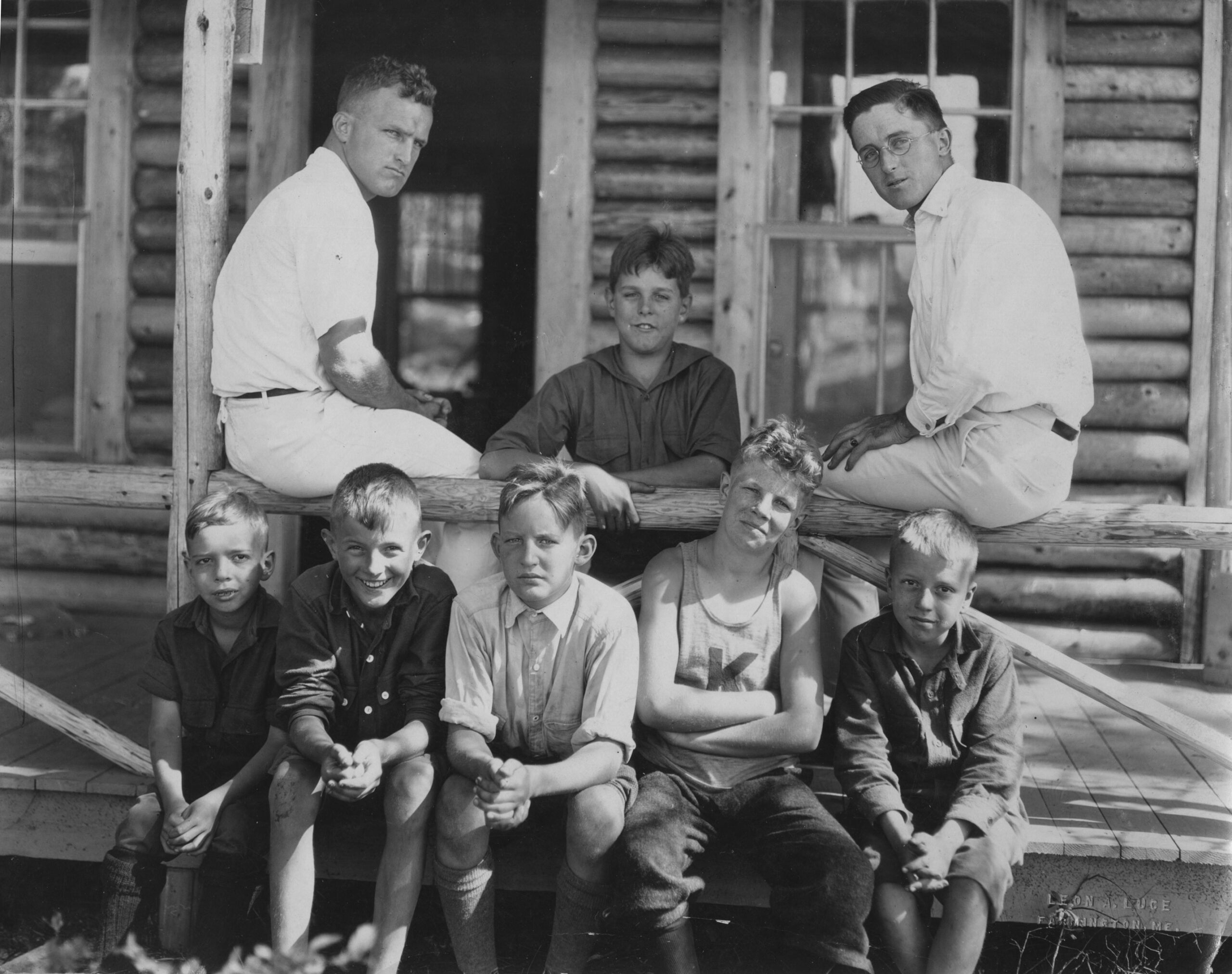
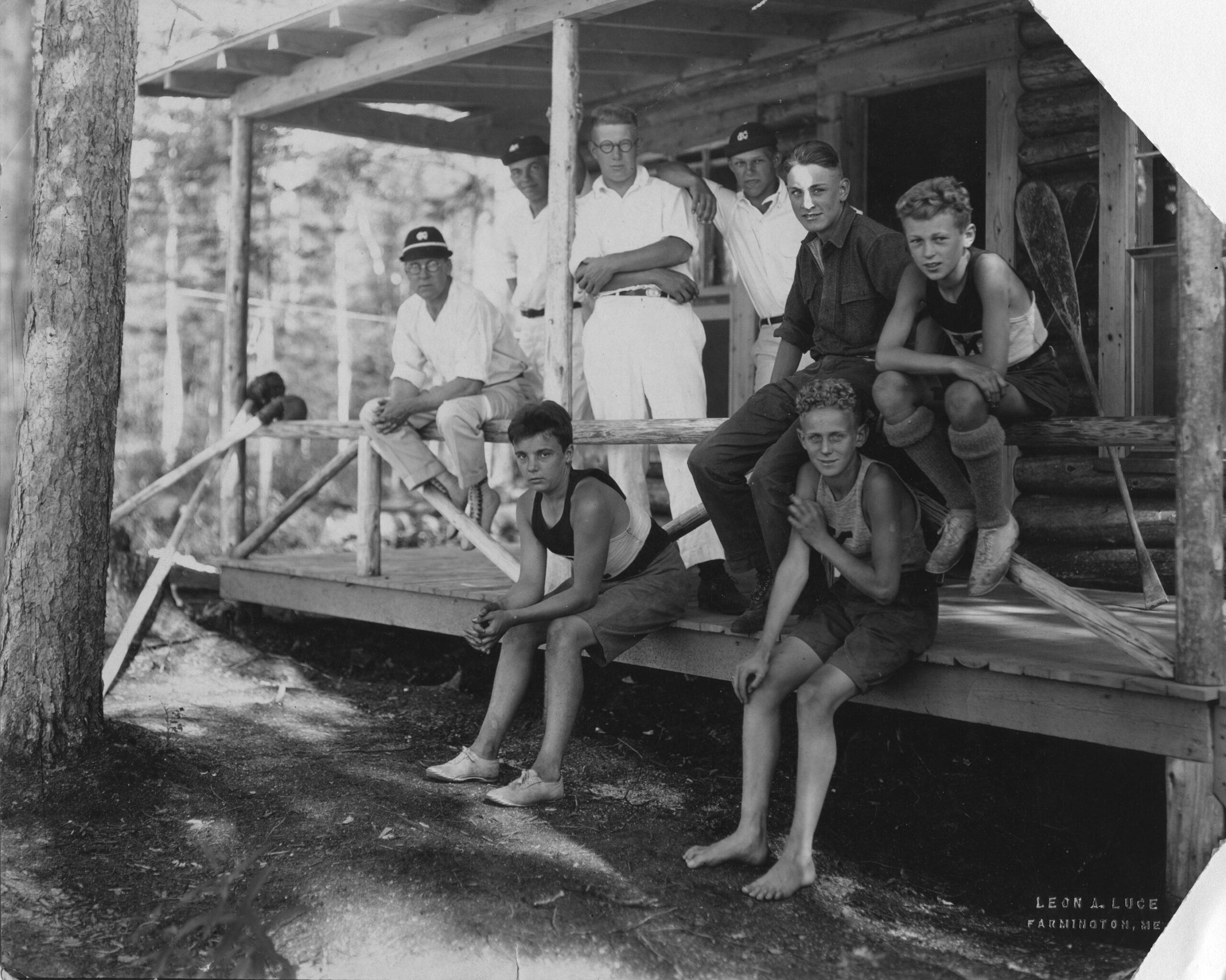
A group of campers poses with their counselors in front of a lodge.
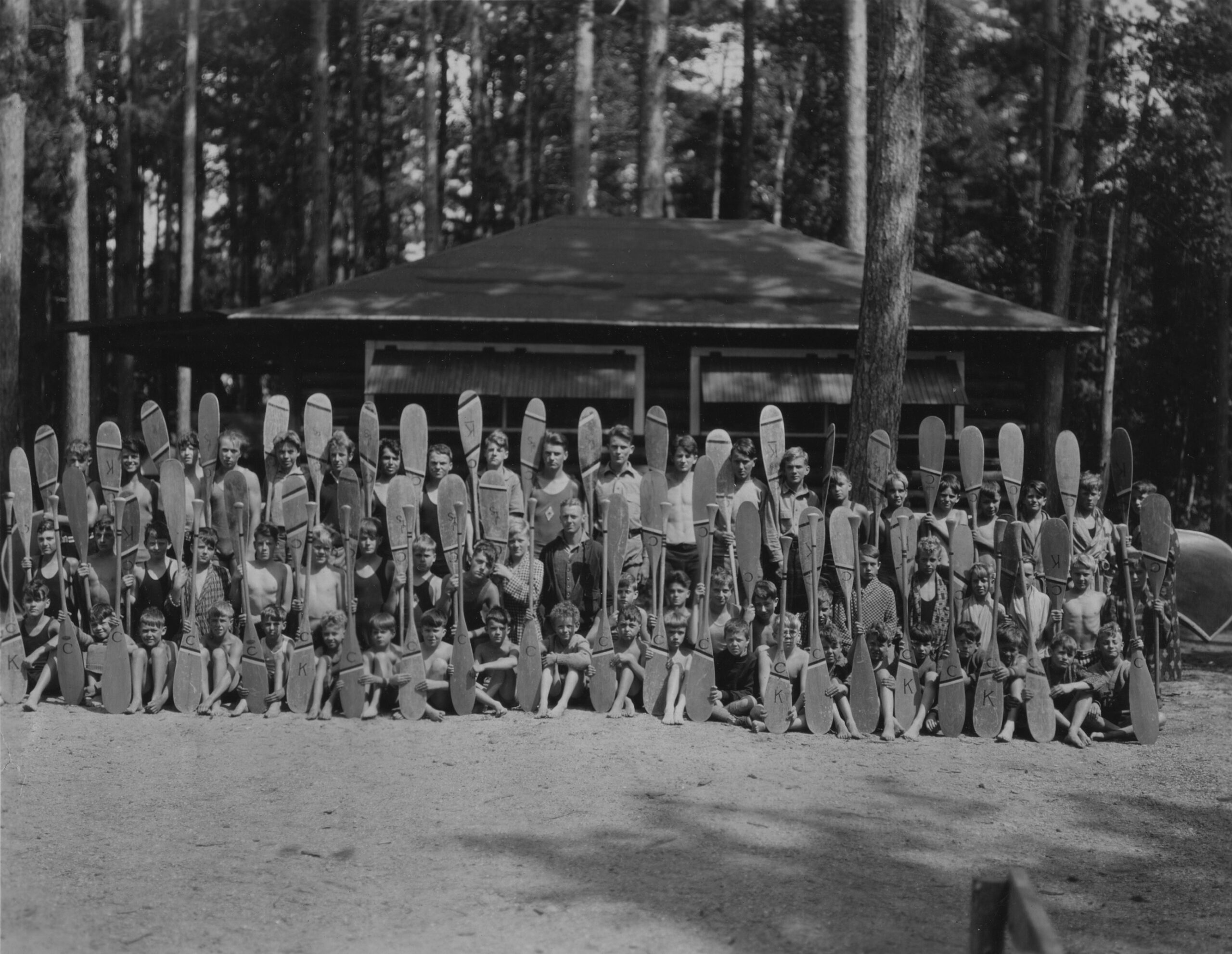
Campers pose with paddles that grant them canoe privileges. The 1930 catalog explains, “To become a canoe man at Kawanhee each boy must pass rigid tests, and win his right to a paddle. Marks of decoration indicate definite accomplishments. To win his ‘C’ he swims the cove, 1/8 mile, and may then use a canoe in the cove, only. If he swims in front of the camp, 1/2 mile, he receives a gray and maroon bar painted diagonally at the top of the blade. After passing a thorough canoe test, two bars at the bottom are added which give him the privilege, if permission is granted, to use the canoe on any part of the lake. Junior Life Savers receive a ‘J.L.S.’ between the top and bottom bars.”
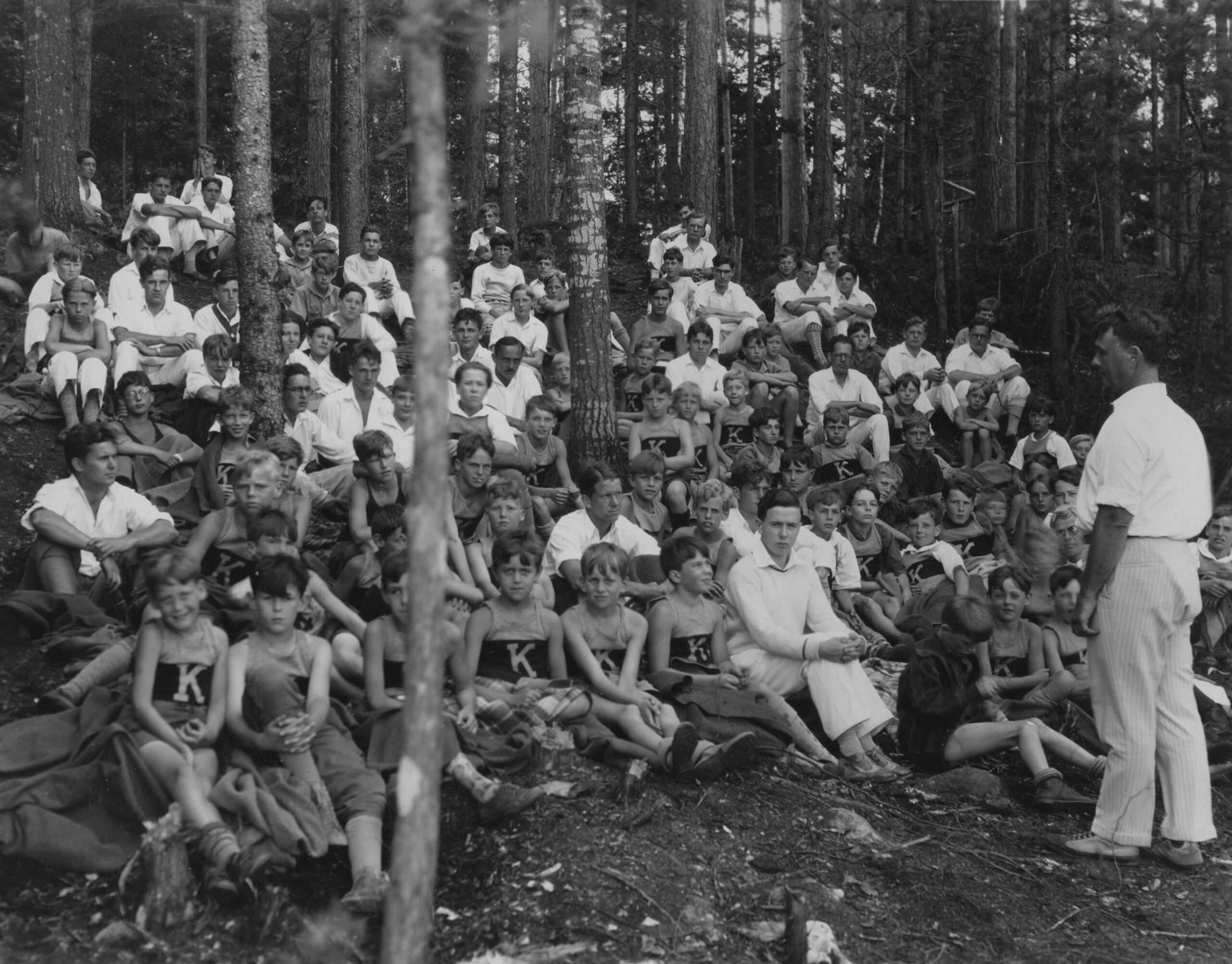
Campers listen to a Sunday morning service given in the outdoor chapel. Though historically non-sectarian, Kawanhee began as a Christian camp. Today, the camp has nondenominational services once a week.
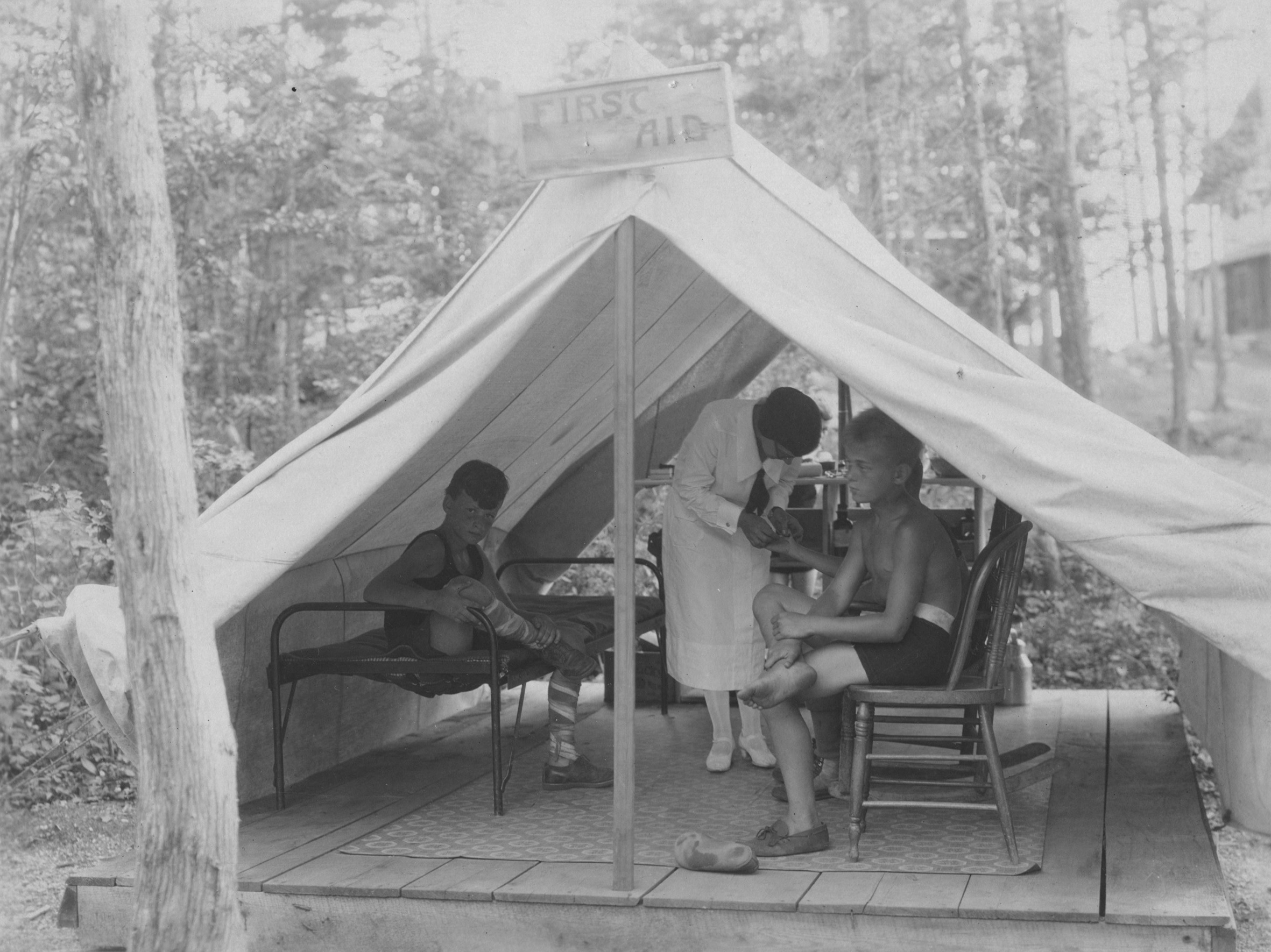
Though the camp infirmary contained ten beds and a room for first-aid treatments, the nurse also pitched a first aid tent near the center of activities. Similar photo published in the 1926 catalog.
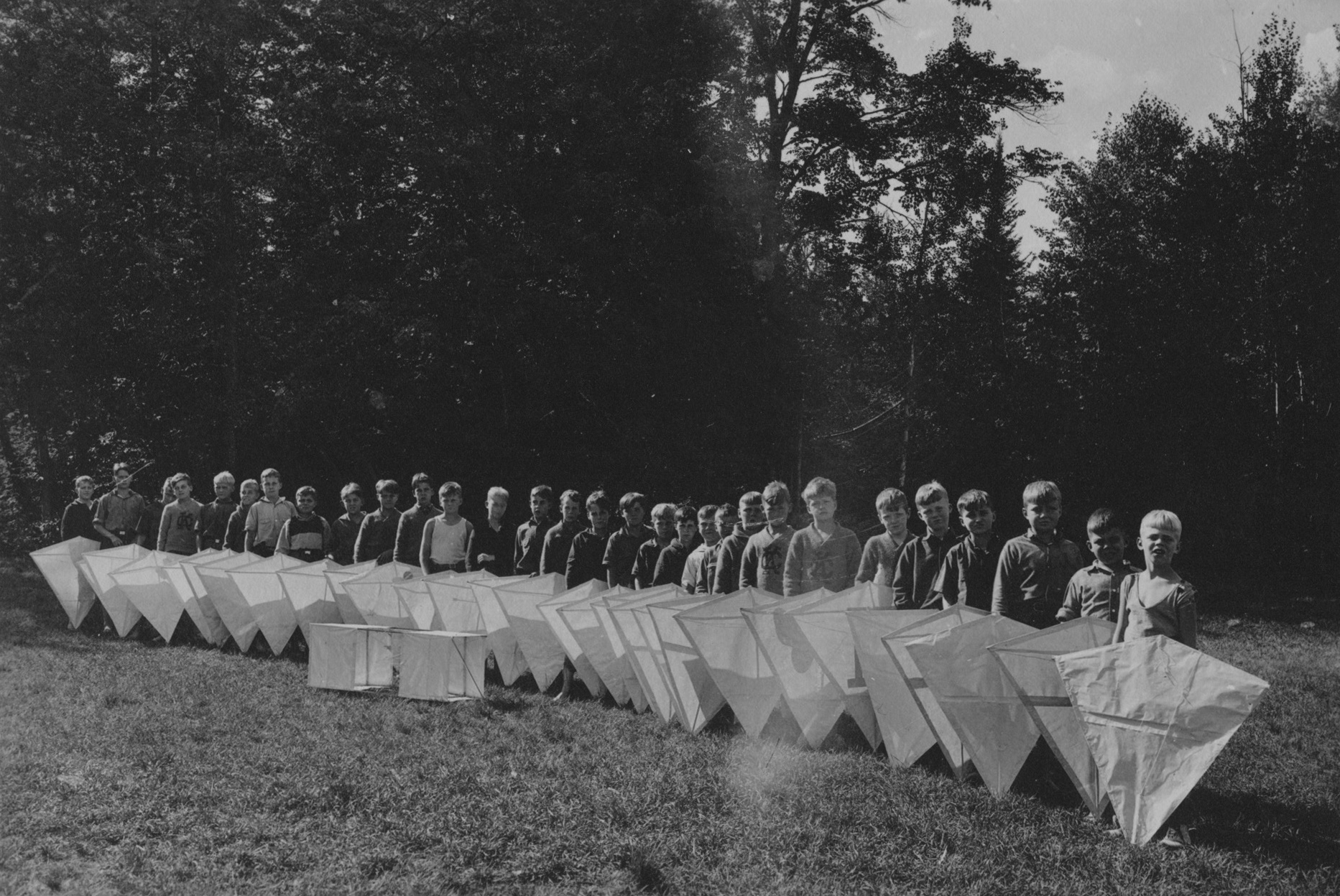
Boys show off their handcrafted kites.
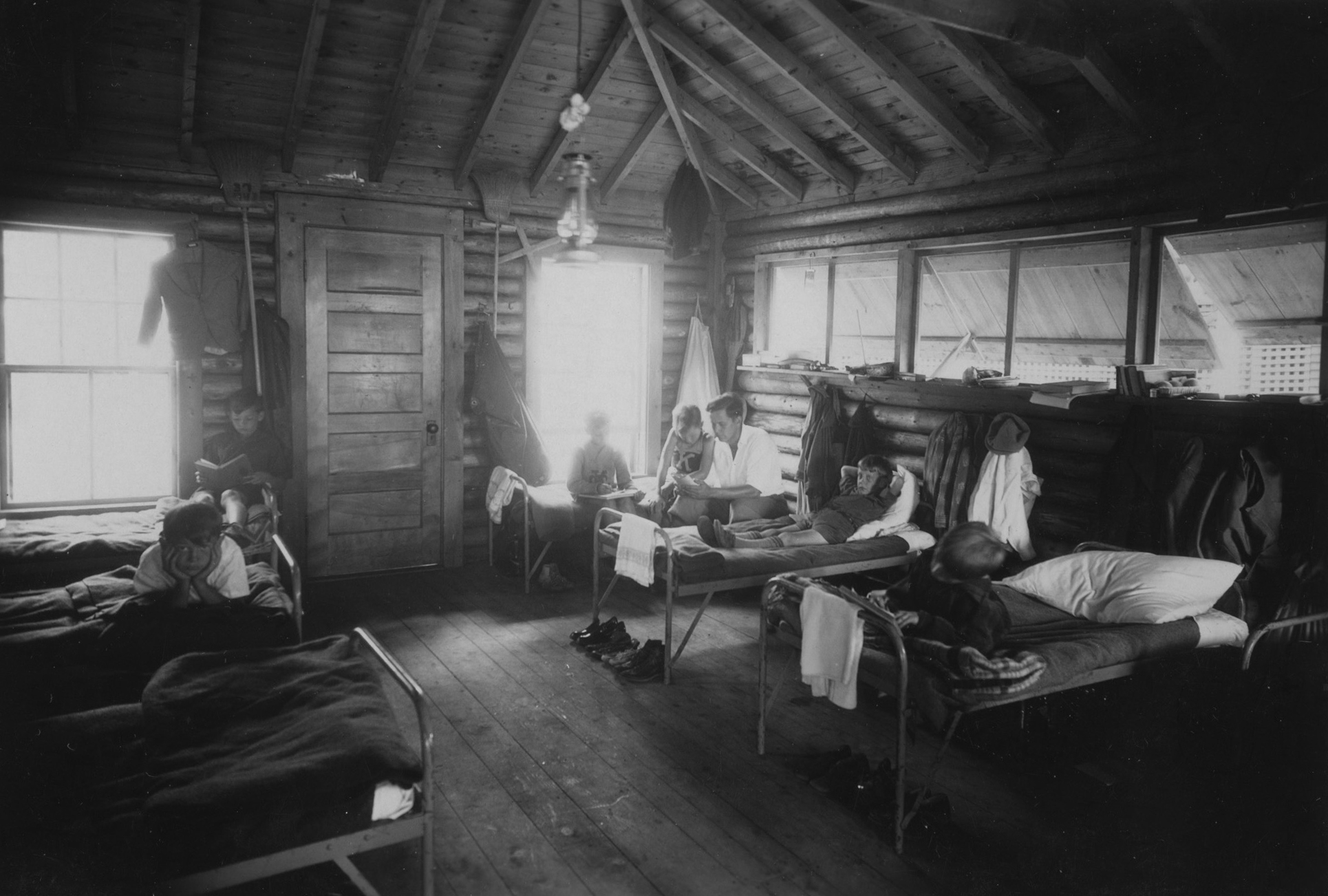
Boys relax inside of their lodge.
Campers and counselors pose in front of their lodge.
Campers launch the model boats they’ve built in woodshop.